

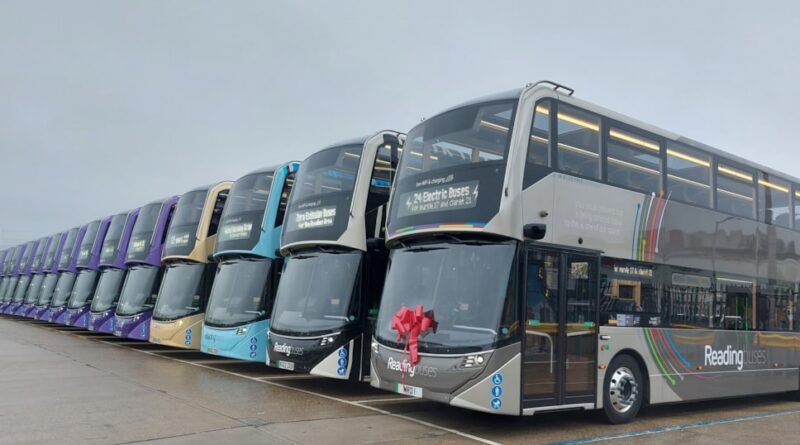
484 New Electric Buses Funded By UK Government.
Electric buses may be one of the most effective uses of electrified mass transit because they transport a significant number of people each day they operate.
Their electric motors are more efficient than internal combustion engines and feature regenerative braking.
They also do not produce poisonous emissions, thus passengers and drivers are not subjected to harmful air pollution. Additionally, electricity is less expensive than petrol or diesel fuel.
There are numerous advantages to using electric buses over diesel buses.
The UK government is aware of these benefits. It just decided to allocate additional financing to purchase approximately 484 new electric buses.
“Buses are the backbone of our public transportation system, and passengers in Liverpool, Nottinghamshire, and West Northamptonshire deserve a network they can trust and be proud of.
This funding will replace polluting diesel buses with new electric vehicles that will improve people’s daily lives by connecting them to work, healthcare, and opportunities while also cleaning up the air we all breathe,” said Secretary of State for Transport Heidi Alexander.
“We’re delivering better connections for people getting about their daily lives, and I’m proud to back the regions’ ambition to do it.”
Another advantage of electric buses is sometimes forgotten. If they are linked to a grid using bidirectional charging technology or a similar technology, they can be combined to form a virtual power plant to support local grids for backup electricity.
This manager does not utilise any electric buses, but there is the possibility of doing so.
When virtual power plants are constructed and EV batteries are used, there is less need for gas-powered peaker plants to provide backup electricity.
The majority of the new electric bus financing comes from three places in the UK:
- South Yorkshire — £33.4 million for 186 buses
- Tees Valley — £11 million for 82 buses
- Devon — £7.53 million for 90 buses.
“With today’s investment, we will be able to complete the task even more quickly.
South Yorkshire has made significant progress by upgrading Olive Grove to a fully electric depot and introducing around 200 zero-emission buses.
It means cleaner air, more reliable buses, and a far better overall experience for passengers,” stated Oliver Coppard, Mayor of South Yorkshire.
Read more on Straightwinfortoday.com

Comments are closed, but trackbacks and pingbacks are open.