
Easily-forgotten early moment in Oxford draw could have changed the day for Middlesbrogh

Easily-forgotten early moment in Oxford draw could have changed the day for Middlesbrogh.
This appears to have been a bad decision for Middlesbrough.
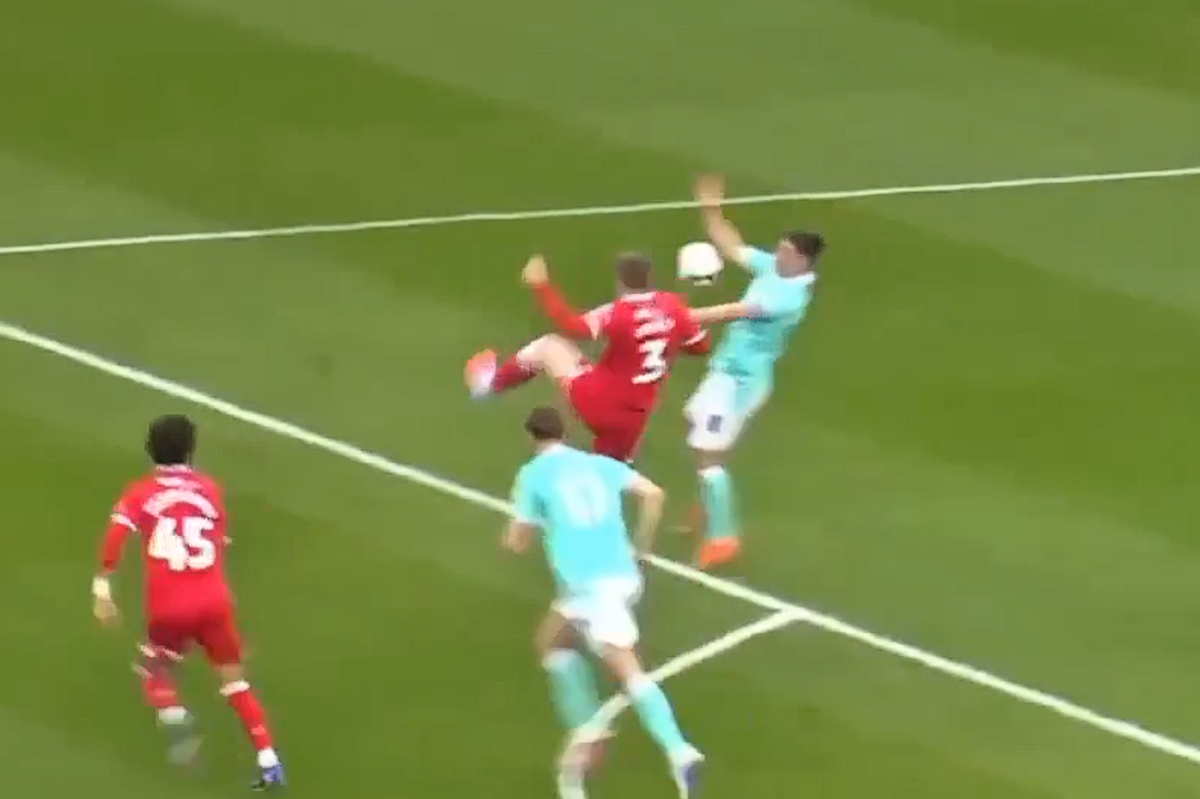
Middlesbrough’s draw with Oxford United was frustrating, but it could have been quite different if Kim Hellberg’s side had been awarded an early penalty at the Riverside.
Only 15 minutes into the game, the Boro players’ requests for a penalty were turned down after the ball struck Cameron Brannagan in the arm.
It happened as Oxford rounded a corner. It fell to Matt Targett on the edge, who attempted to flick the ball past the out-rushing United captain and sprint into the penalty box.
The handball regulation has been a source of contention for many years, with Law 12.1 of the IFAB rules defining what constitutes a handball, in this case, an inadvertent incidence.
The legislation states: “It is an infraction if a player touches the ball with their hand/arm when it has made their body unreasonably larger.
A player is judged to have made their body unnaturally larger if the location of their hand/arm is not a result of, or justifiable by, the player’s body movement in that precise situation.
“By having their hand/arm in such a position, the player takes a risk of their hand/arm being hit by the ball and being penalised.”
In this case, given Brannagan’s arm lifted in the air and his position appearing to be just inside his penalty area, it’s difficult not to believe Boro were refused a penalty.
The fact that Targett was refused – the same man who conceded a spot kick in Monday’s defeat at Coventry City with his arm significantly less extended from his body than Brannagan’s – adds to Boro’s justified sense of outrage at another penalty decision against them.
There was little debate over the Coventry penalty, which came at a time when Boro had just halved their deficit and were hoping to continue that energy into attempts to equalise.
But if Targett’s was ruled a handball, it’s safe to assume Brannagan’s was, too. It’s true that Boro squandered multiple more chances to win the game and score what would have been a decisive goal against an Oxford side who sat deep and provided little room.
But, without a doubt, if Boro had been awarded that early penalty, a lead inside the first 20 minutes would have changed the entire complexion of the game, with the visitors likely forced to show a little more attacking intent, giving Boro a little more space to exploit than they were otherwise afforded throughout the game.
Read more on Straightwinfortoday.com

Comments are closed, but trackbacks and pingbacks are open.