


Dundee was gripped by shark frenzy when Jaws came to city cinemas in 1975.
When the Spielberg classic opened to full households, Dundonians were scared to walk into the lake, so police were ordered to restore order.
Graeme Strachan Jaws swam into Dundee cinemas 50 years ago, causing screaming scenes and a full-fledged riot. One Dundonian promised never to dip her feet in the Tay again.
A Dundee salon even offered a special Jaws haircut to women. Shortly after the US premiere, the publicity machine was in full swing in the United Kingdom.
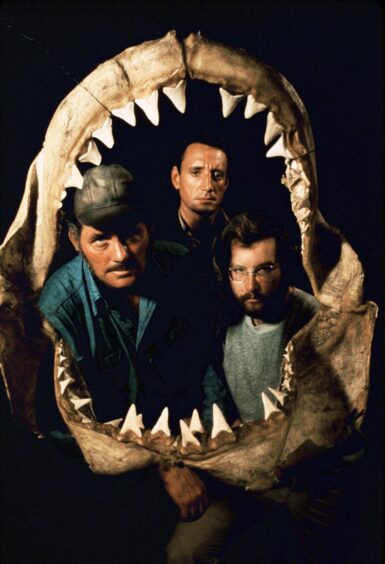
There were rumours and hints regarding the film for weeks previously. Steven Spielberg directed the thriller about a huge great white shark terrorising Amity Island, which is based on Peter Benchley’s best-selling book.
Robert Shaw as the veteran shark hunter Quint, Richard Dreyfuss the nerdy shark expert Hooper, and Roy Scheider the police chief Martin Brody.
John Williams’ score contributed to heighten the suspense.
You’re gonna need a bigger cinema…
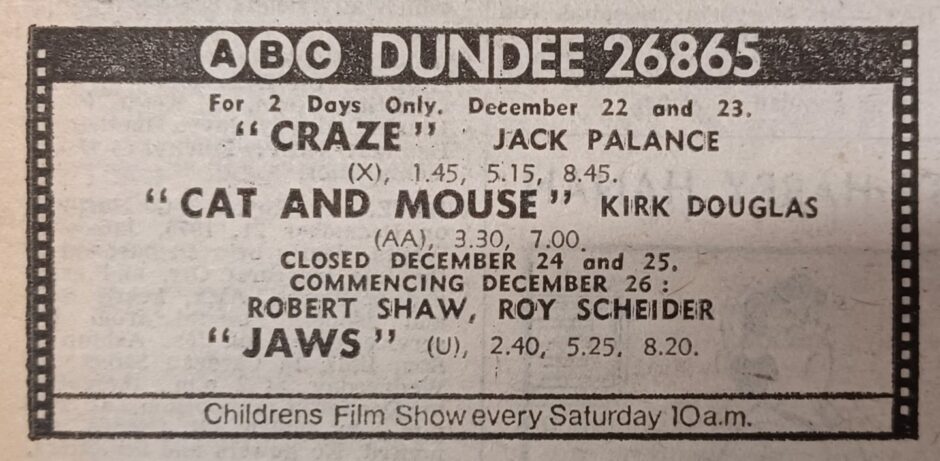
The film premiered in Dundee on Boxing Day 1975 at the ABC in Seagate. There were three showings per day.
It received a universal certificate, however there was a box office warning.
Jaws would be “particularly disturbing to younger unaccompanied children.”
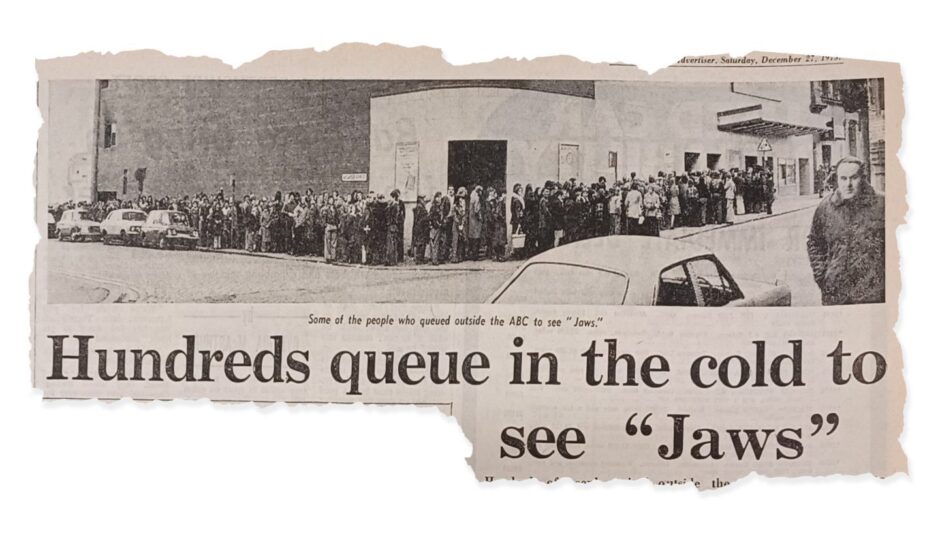
The wait for the matinee movie stretched from Gellatly Street to Dock Street. Back then, you couldn’t reserve tickets for the ABC.
All of the seats were full, and hundreds had to be turned away. “Hundreds queue in the cold to see Jaws” was the headline in The Courier.
Ian Minter of Tummel Place was at the head of the queue on Boxing Day. “It’s not the type of thing I usually do, but I am queuing here because I’m determined to see the film,” he told me.
“A friend read the book and told me how good it was and I’ve heard a lot about it in the press and on television.”
John Flynn from Ballantrae Gardens said he “thought the film was great”.
“I queued for 45 minutes to get in but I think it was worth it,” he said. “The film was quite terrifying in parts.”“I’m never going into the river again,” said Helen Christie from Lochee.
“I was terrified for most of the film but I think I quite enjoyed it.”Dundee cinema bosses said the youngest viewers were barely four and five years old.
The audience cheered when the shark died
The Courier said that the cinema was packed with screams. Many folks were so impressed that they went back to see it several times.
Christopher Ritchie, ABC’s assistant manager, stated that some people felt ill during the film and wanted to go outdoors for fresh air.
However, he stated that the emotions did not quite approach those of The Exorcist in 1973, in which some people fainted in the crowd. He said the audience often cheered when the shark died.
In December 1975, a correspondent to The Courier’s readers’ letters page stated that the massive lineups demonstrated the enormous effect of national exposure on viewers.
“This movie is another winner and no doubt will leave its mark for some time to come as the story, acting and technical skills used in its production are superb,” according to him.”
Those who are among the squeamish should not venture to see this film unless they carry a supply of smelling salts as many realistic scenes portray the horrible actions of a giant man-eating shark in its wicked lust for blood.”
Ernest Massie from St Giles Terrace closed his letter by putting a light on the dolphin, reminding everyone that not all water creatures were hostile to people.
Did you get a Jaws haircut in 1976?
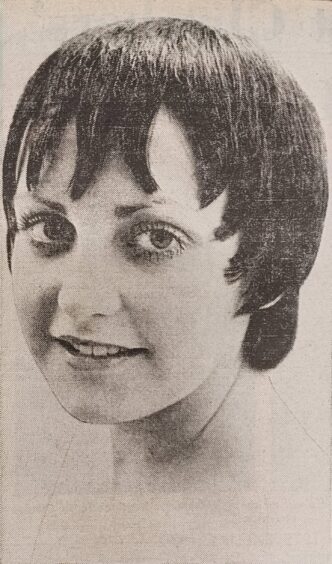
Jaws was screened for a “extended run” at ABC till February 28. Mary Forbes of the Parr Salon in Dundee designed the “Jaws” haircut for women.
The cut was described as “a fashion you could easily get hooked on”. According to the Evening Telegraph, the style was “basically a cap shape, with teeth like fronds lying close to the forehead to simulate shark teeth.”
According to Jack Searle’s book, The Big Picture: Cinemas of Dundee, Jaws caused “probably the only film-related riot to occur in the city”.
The event occurred at the Victoria Cinema on Victoria Road. An huge queue prompted the doors to close, leaving hundreds outdoors.
According to Jack, the enraged moviegoers rioted and the police were called in.
There were howls and screams at the Regal
Pamela Mulgrew, the author of Let’s Go to the Pictures: Memories of Cinema in Dundee, watched Jaws at the Regal in Broughty Ferry when she was five.

“We saw numerous films there, but Jaws is one I’ll never forget,” she remarked. “I can still remember the haunting theme tune.”Whenever there was a scary moment, we all screamed and hid behind our coats.””Screaming was popular at the time.
“There were many yelps and howls from us young moviegoers. “Jaws was a masterpiece that inspired a number of animal-eats-human pictures.
“As a teenager, I slipped in underage and watched The Exorcist, Amityville Horror, Friday the 13th, and Halloween without flinching. “My Regal upbringing undoubtedly made me resistant to terror!
“Looking back, you can see the problems in Jaws: the shark looks unnatural and rubbery, the special effects are out of date, and the storyline is a little weak. “It did, however, spawn several sequels until the final effort, with Michael Caine, which was the studio literally flogging a dead shark!”

And Jaws sank its teeth into the public consciousness. Beach vacations fell precipitously in 1976, with the movie to blame.Shark sightings have also increased, likely due to increasing concern.
Dundee chase scene right out of Jaws
In a thrilling replay of Jaws’ shark chase, Dundee witnessed its own watery drama even before Spielberg’s masterpiece aired on ABC.
In November 1883, a young humpback whale entered the Firth of Tay, attracting the interest of whalers in what was then Britain’s largest whaling port.
Eager to capitalise on the possible financial bonanza, the whalers tracked the 16.5-ton, 40-foot “great Tay Whale” for 45 kilometres along the Mearns shore.
John Woods, often known as Greasy Johnny, paid £226 for the catch. Woods purchased wild creatures from ship skippers.
He displayed the creature in a big tent opposite a flour mill on East Dock Street, charging guests a shilling during the day and sixpence at night.
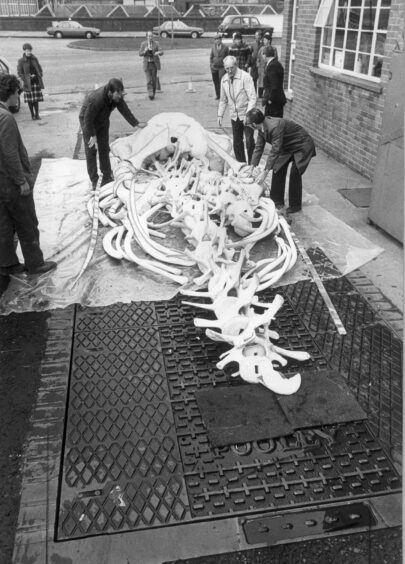
After the whale’s remains were embalmed and rebuilt, it went on a tour to Aberdeen, Edinburgh, Liverpool, London, and Manchester.
Greasy Johnny’s tour concluded, and he presented the bones to the city.
William McGonagall immortalised the hunt in rhyme in The Famous Tay Whale, and the skeleton eventually ended up at The McManus Art Gallery.
Read more on Straightwinfortoday.com

Comments are closed, but trackbacks and pingbacks are open.