
Exclusive: First won’t rule out handing back Aberdeen’s hydrogen buses amid lack of council promises on fuel supply

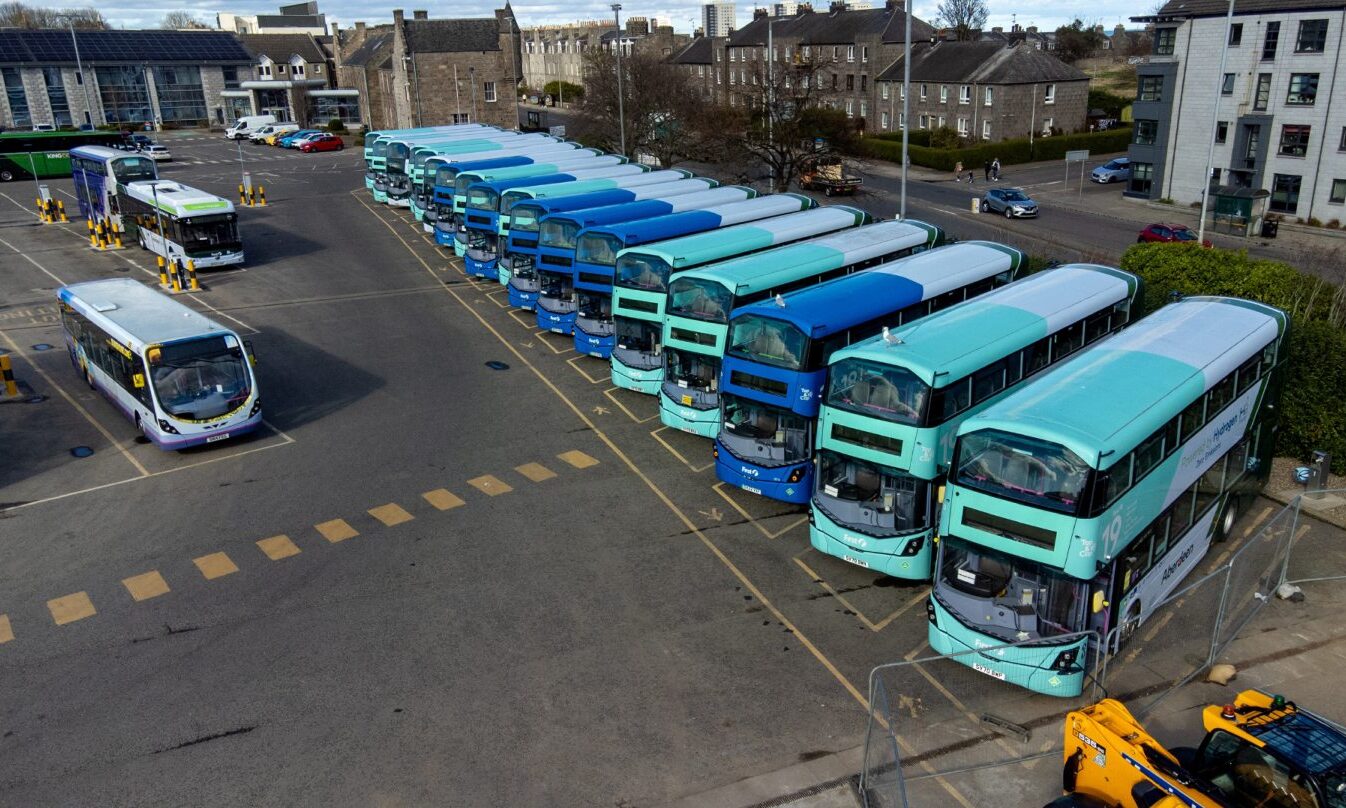
Exclusive: First won’t rule out handing back Aberdeen’s hydrogen buses amid lack of council promises on fuel supply.
Council leaders hope to have hydrogen to fuel the city’s fleet shortly… but there’s no guarantee the fuel will be shared with First Bus, whose leased double deckers are still stuck at the depot.
Aberdeen’s hydrogen drought may soon come to an end, more than 18 months after the city’s multi-million-pound H-powered bus fleet was forced off the road due to pump troubles.
Top officials are optimistic that the council “will be able to access hydrogen fuel early this year”. Operations chief Mark Reilly was less ready to commit to a specific day or even a month when the taps would be opened.
Even if that occurs, The P&J can reveal that it is uncertain whether the hydrogen will be provided to First Bus in order to get the buses back on the roads.
A key councillor has also conceded that there is a danger that First Bus would become dissatisfied and return their leased buses worth £500,000 to the council. The Aberdeen-based corporation hasn’t ruled it out.
In November, the city council blamed “supply chain delays due to bespoke material requirements” for the delay in fixing two Aberdeen hydrogen fuelling stations.
Hydrogen key to Aberdeen’s green energy future
Hydrogen is predicted to play a significant part in the economic future of Aberdeen.
The city council has committed approximately £20 million to the first phase of its joint venture with BP to manufacture green hydrogen from solar power at the former Ness landfill in Torry.

Aberdeen has been an early adopter of hydrogen vehicles, as the council seeks to demonstrate the fuel’s feasibility on a wide scale market.
The renewable fuel from the Hareness Road hydrogen hub is intended to power the city’s fleet of hydrogen vehicles, which includes 25 buses.
It is expected to start manufacturing this year. However, there is hope that output may be increased to provide enough fuel for rail, freight and maritime operations, as well as home heating and export.



Comments are closed, but trackbacks and pingbacks are open.