
Kim Hellberg’s high-octane football has Middlesbrough closing in on the Premier League before Coventry clash


Kim Hellberg’s high-octane football has Middlesbrough closing in on the Premier League before Coventry clash.
Middlesbrough isn’t the first location that comes to mind when you think about stylistic innovation, but the Championship club is blazing a trail. A six-game winning streak has lifted them to the top.
Register for free to continue reading
Middlesbrough may not be the first location associated with stylistic innovation, yet in the Championship, Boro are pioneering a path.
A six-game winning streak has propelled them to the top of the table ahead of Monday night’s critical encounter against promotion rivals Coventry, and they’ve done so by playing football unlike anybody else in the league.
The manager, Kim Hellberg, arrived at the Riverside Stadium in November with Middlesbrough third in the league but rocked by Rob Edwards’ unexpected departure to Wolves.
On the surface, Boro fans had little to cheer about: the Swedish coach, 37, had never worked outside of his native country; he had no titles outside of Swedish non-league, and no notable playing career.
Hellberg’s Wikipedia article was more like a post-it note. “I’m the most Googled name in Teesside,” he joked during his unveiling. Registration is a free and simple way to help support our totally independent news.
Registering grants you restricted access to Premium stories, unique newsletters, commenting, and virtual events with our finest journalists. Kieran Scott, Middlesbrough’s head of football, led the appointment, having had Hellberg’s name written down in his notepad for a number of years.
Hellberg first attracted the eye when he helped tiny IFK Varnamo punch above their weight in Sweden’s top flight, Allsvenskan, followed by consecutive second-place finishes with Hammarby, who played offensive, possession-based football.
He had a series of talks, first with Scott, then with chief executive Neil Bausor and chairman Steve Gibson, who were impressed by his comprehensive ideas for getting the most out of Middlesbrough’s players.
Scott agreed with Hellberg’s assessment of a defensively solid club that lacked offensive synergy.

Scott remarked, in what was not necessarily a glowing endorsement of Edwards’ efforts, that “It’s a group that just needs a bit of coaching.
“The Middlesbrough players soon embraced Hellberg’s concept. “Everyone loves him and wants to work with him,” said forward Morgan Whittaker following Hellberg’s debut, a 2-1 comeback victory over Derby County in which Whittaker scored the goal. Boro began to demonstrate new characteristics such as surprising movement and a suffocating high press, which helped him dominate the ball.
During Hellberg’s leadership, possession rates increased from mid-table to the highest in the Championship, averaging over 60%.
Middlesbrough have won 11 of their 16 games since Hellberg took over, and what has stood out is their rapid and fluid combination play, which has converted them into such an appealing club to watch.
Hellberg mentions Pep Guardiola as a coaching influence, however the Swede does not follow Guardiola’s famous Juego de Posición principles.
His players do not have permanent stations in a highly calibrated system spread over the pitch; instead, they are encouraged to roam freely and close together in order to make quick contacts in confined places. Hellberg claims his role is to provide a platform for players to perform, not to force them to follow his blueprint.
Without particularly gifted touchline wingers, Boro play mostly through the middle of the pitch in their hypothetical 4-3-3 configuration, relying on one-twos and flicks around the corner to break down set defences.
They clearly demonstrate what tactics writer and Uefa A-licensed coach Jamie Hamilton refers to as a “relationist” approach, even if Hellberg hasn’t said it publicly.
If the criticism levelled at Guardiola’s world-famous positional play is that it can stifle a team’s flair and individualism, relationist football is intended to be an antidote, a place for liberty and expression, complete with diagonal passes, clever dummies, and quick, almost telepathic exchanges.
Relationist play was most famously used in recent years by Brazilian club Fluminense under Fernando Diniz, and it has now spread throughout the world, from Malmo to the Hungarian national team.
Hamilton saw some of those aspects in Hellberg’s Varnamo team some years ago, telling The Independent: “I remember watching them play against Malmo and thinking, ‘They’re pretty good!'”
Hamilton credits Hellberg’s long-time assistant, David Selini, with helping to instill their style of play. “Selini uses the term ‘common language’. You want to try to help the players understand each other, so who am I playing with? What do [Hayden] Hackney and [Aidan] Morris enjoy doing?
Is he a guy who enjoys carrying the ball? Is he a guy who prefers to lay it off the first time? So it’s all about communicating with other players and recognising their preferences and habits.
“That is assisted in training by employing some common principles, such as pass and move or diagonals, and then within that framework, players can gain knowledge of one another.
And this is essential to a more relational approach, rather than utilising a fixed positional structure to facilitate those partnerships.”
The rapid movement and high-octane attacking approach are reminiscent of Marcelo Bielsa’s title-winning Leeds team (Bielsa is another of Hellberg’s influences), but Boro are unique in the current Championship, forging their own path to the Premier League.
Perhaps Hellberg’s most demanding requirement of his players is that they never deviate from their particular style of play.
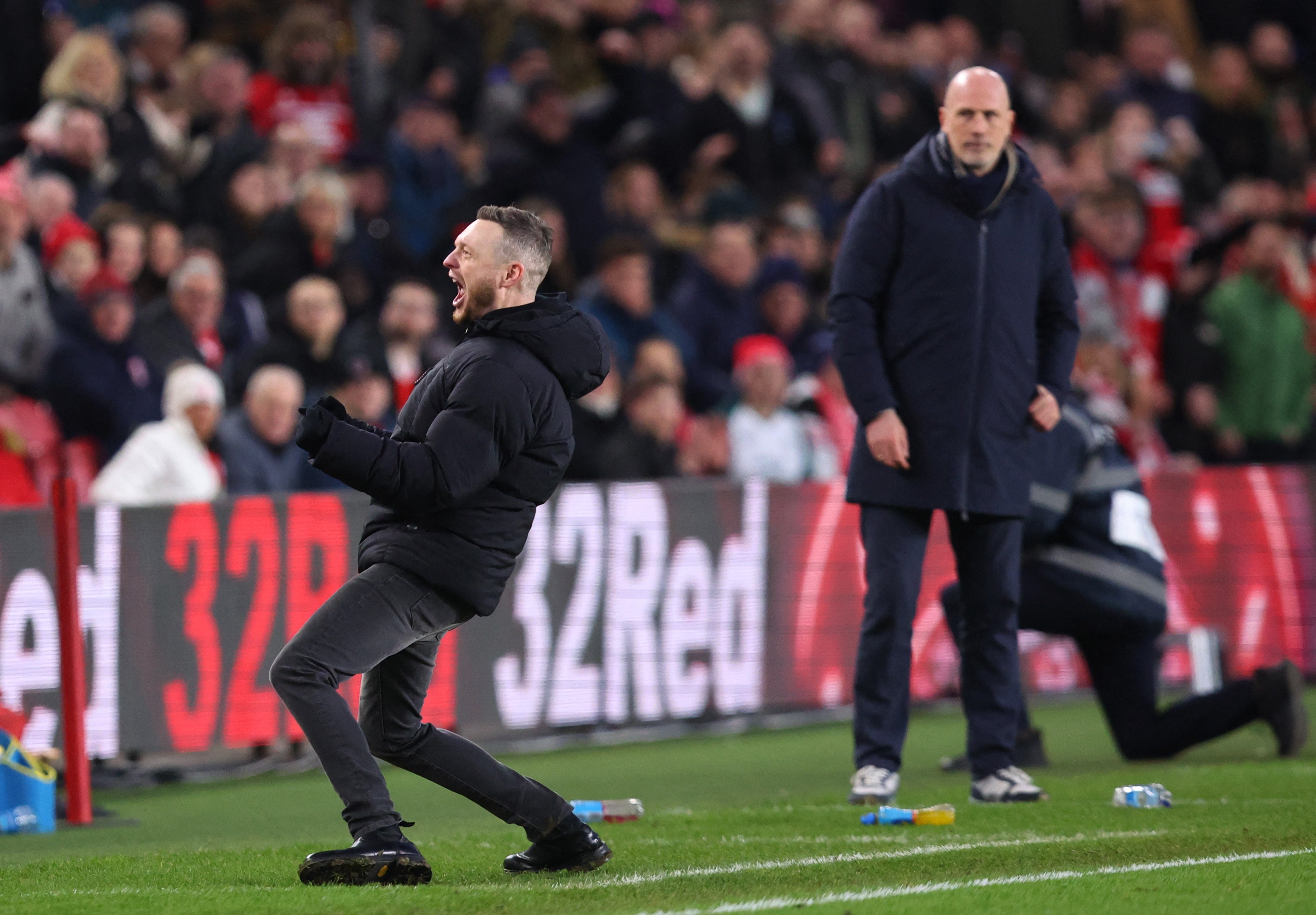
“I was so proud,” he stated following last weekend’s victory over Sheffield United. “We scored after 19 minutes and controlled 63 percent of the ball throughout the game.
Away from home, I think that is remarkable; when you score early against that excellent of a team and continue to play the way you want to play in front of a sold-out crowd, I think that is incredible.”
When you score that early goal away from home, it’s easy to drop and do something else, or the opponent forces you to do it, but that was a good representation of the team we want to be.”
We want to control our fate, we want to move forward as rapidly as possible, and we want to generate opportunities, which I believe we achieved quite well.”
Read more on Straightwinfortoday.com

Comments are closed, but trackbacks and pingbacks are open.