

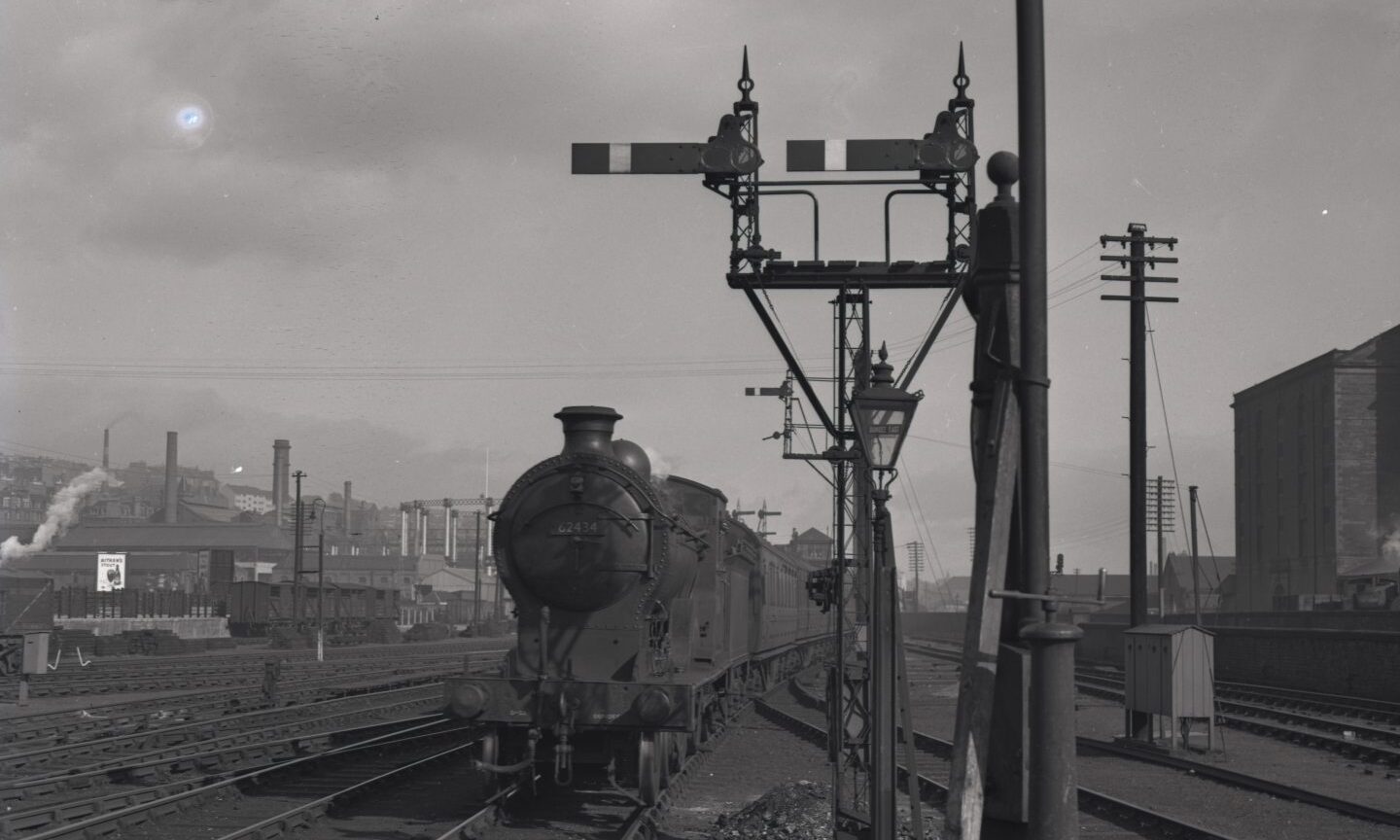
Renowned Dundee scientist’s railway photographs recall the last days of steam.
These photographs provide a look into life on and around Dundee’s trains as the steam era came to an end.
Dr James F. Riley’s images, which were shared by Kenneth Baxter of Dundee University Archive Services, depict steam trains and long-lost stations.
The Yorkshire-born train enthusiast began working as a consultant radiotherapist at Dundee Royal Infirmary in 1948 and later taught at the university’s medical school.
“He was renowned for his research which discovered that the mast cell was the main producer of histamine in the body, as well as identifying the link between mast cells and asthma,” Dr Baxter said.
“His files, which are kept in the archives, include many beautiful railway images shot in Dundee and elsewhere, as well as things relating to his medical profession and research activities.
“This collection of photographs provides an overview of the various steam locomotives that could be seen in and around Dundee in the 1950s and 1960s, as well as some images of long-gone stations.
“This period marked the end of an era as significant branch closures began and steam began to be replaced by diesels.”
West Links Station
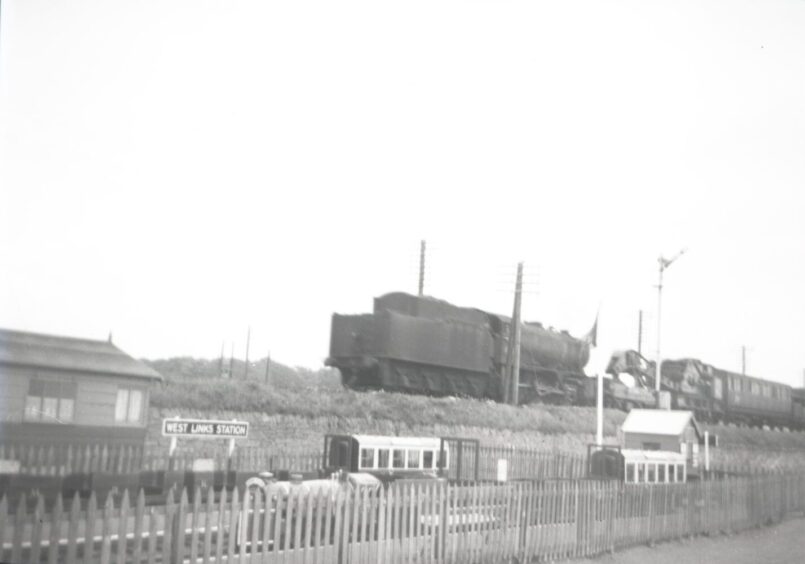
In 1952, the first picture was taken.
According to Dr. Baxter, “the image shows an ex-War Department Austerity 2-8-0 passing West Links Station on Kerr’s Miniature Railway in Arbroath with a breakdown train.”
“To deal with a coach that had derailed during shunting, the train had been called from Thornton Junction in Fife.”
East Station
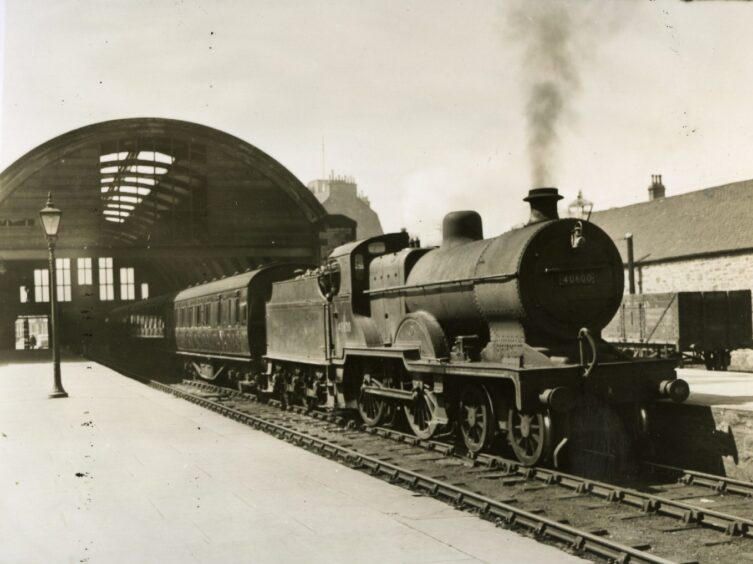
Ex-LMS locomotive No. 40600 at Dundee East Station in April 1953.
Dr. Baxter stated, “This was a 2P class locomotive manufactured at Derby Works in 1928 and intended for light passenger service.
“The loco was based in Dundee for a relatively short period, being allocated to Tay Bridge shed from late December 1952 until May 1954.”
East Station was left to deteriorate before being demolished in 1964.
Camperdown Junction
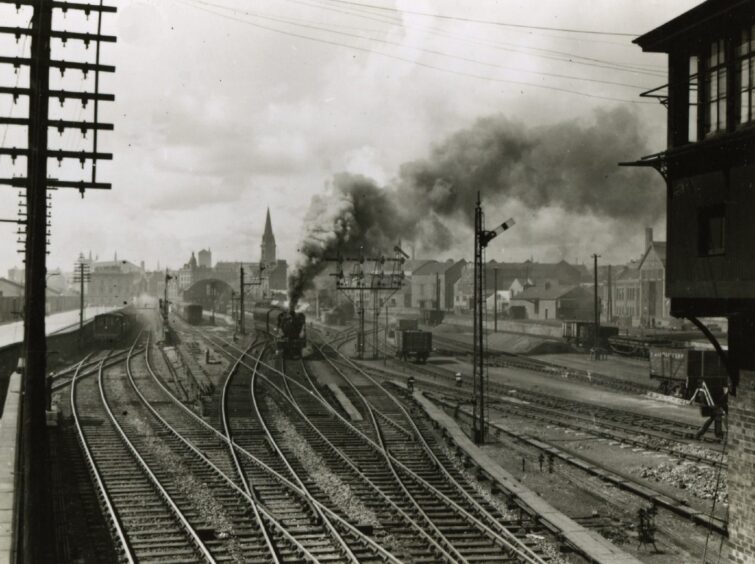
Camperdown Junction with Dundee East Station in the backdrop, April 1953.
“The locomotive pulling the train that can be seen leaving the station is possibly an ex-LMS Class 2P 4-4-0 originally built in 1928,” Dr Baxter stated.
“On the left, you can see the back of a train entering Dock Street Tunnel, headed towards Tay Bridge Station.
“This was previously a busy railway hub.
“Camperdown Junction marked the point where the line to Dundee Tay Bridge Station – today’s Dundee Station – joined the Dundee and Arbroath Railway.”
Barnhill
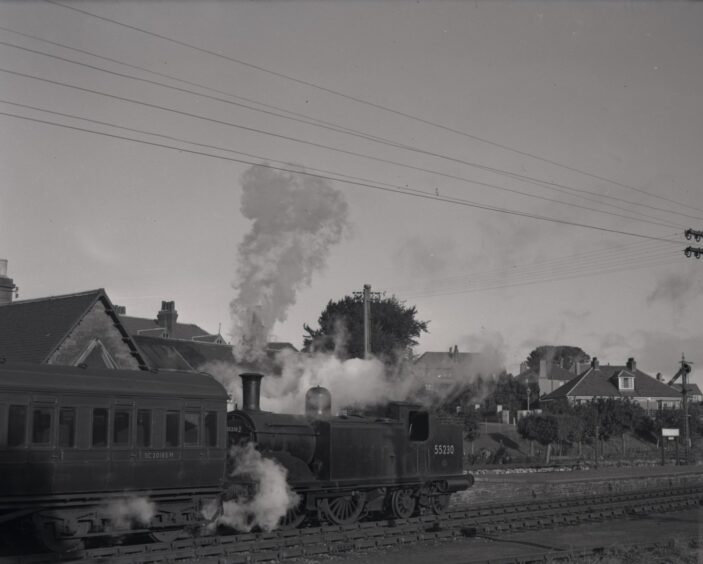
The Dundee and Forfar Direct Railway has a local service that stops at Barnhill Station.
Dr. Baxter stated, “Although the line frequently struggled for passenger traffic, Barnhill generated a reasonable number of passengers who commuted to Dundee.”
“The 0-4-4 tank engine, No 55230, was built for the Caledonian Railway in 1915, and faint LMS lettering on its side suggests the photograph dates from the early years of British Railways after nationalisation in 1948.”
Scott class
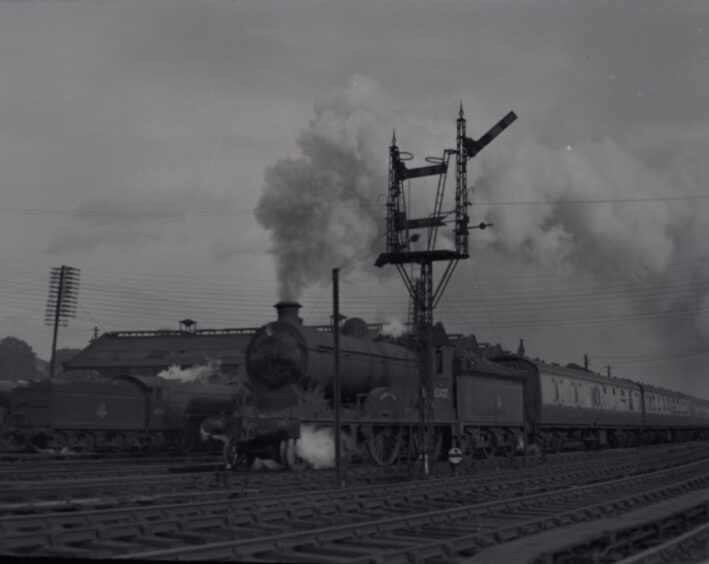
During the 1950s, a member of the “Scott class” travels through Tay Bridge shed on a passenger train.
Dr. Baxter stated: “Dumbiedykes were built for the North British Railway in 1914 as part of its J Class and originally had the number 418.
“William Paton Reid, locomotive superintendent of the NBR, developed the class.
“It consisted of 43 engines built between 1909 and 1920.”
“They were named after characters from Sir Walter Scott’s stories, which is why they were popularly known as the Scott class.”
Dumbiedykes is named after a character from The Heart of Midlothian.
Dock Street
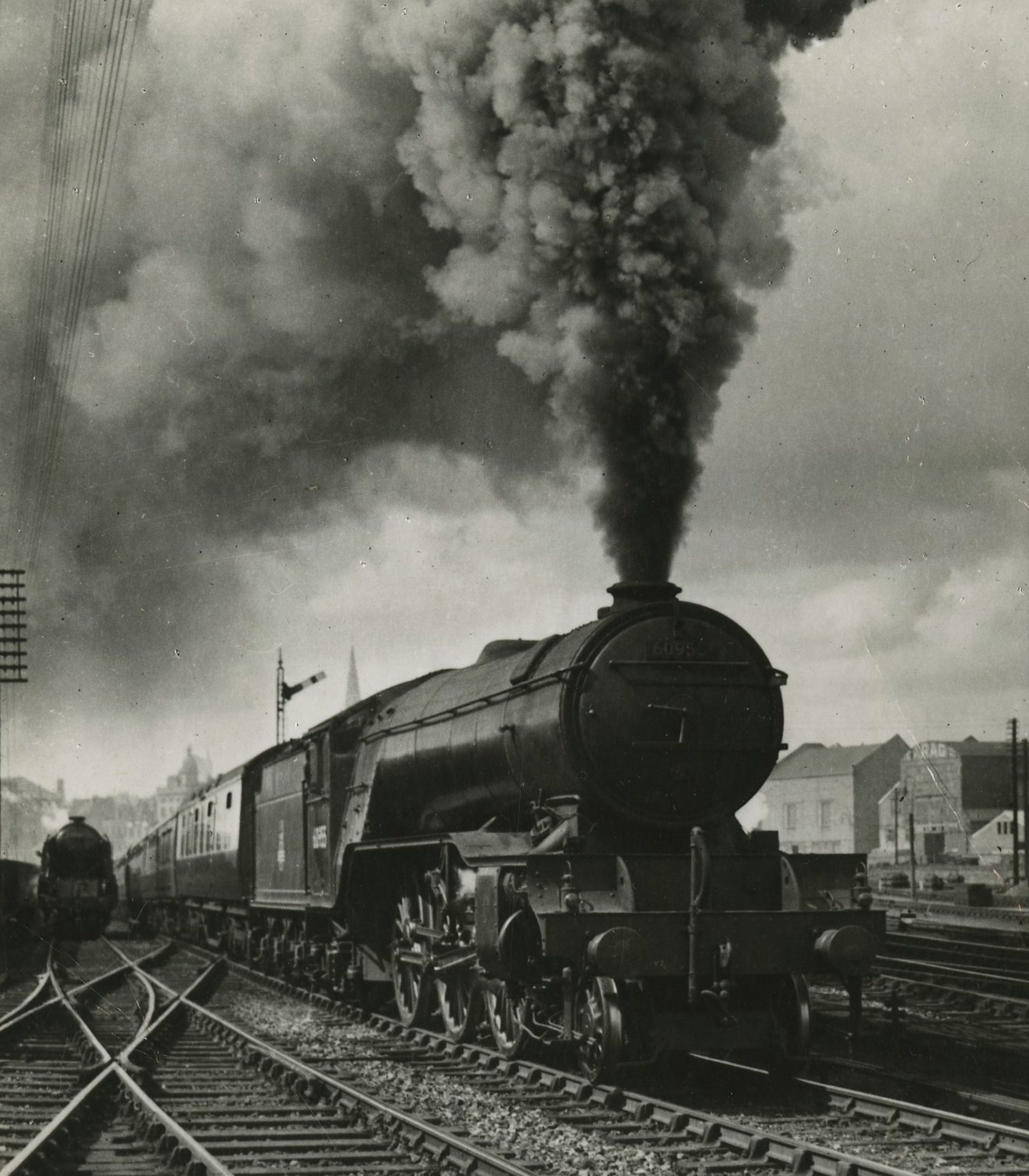
Dr. Baxter stated, “The shot of the train departing Dock Street tunnel shows ex-LNER V2 class No 60955.
“Designed by Sir Nigel Gresley, the V2s were a highly successful class of mixed traffic engines, with 184 built between 1936 and 1944.”
“This particular locomotive was built in 1942 and scrapped in 1966.”
Tay Bridge Shed
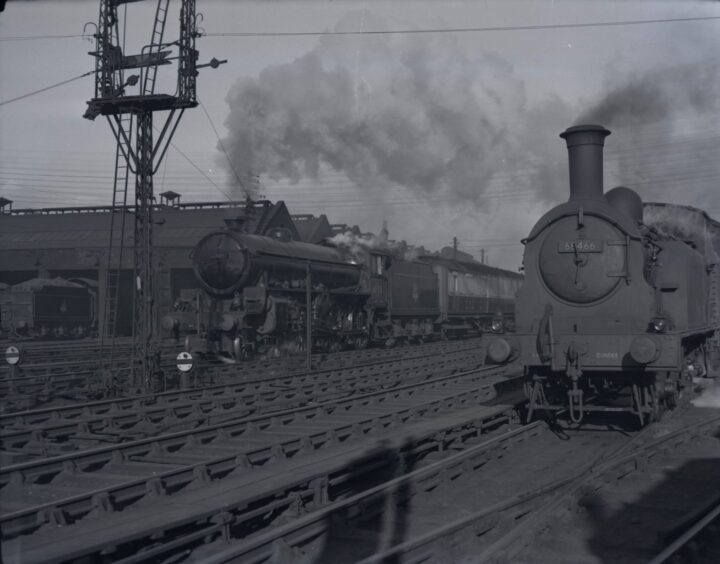
The following photograph shows another ex-LNER engine, no. 61103, crossing Tay Bridge Shed with a passenger train.
Dr. Baxter stated, “This was one of Edward Thompson’s B1 class of mixed traffic engines, produced in 1946.
“Over 400 of these engines were produced between 1942 and 1952, making them a familiar sight on British railways.
“On the right of the shot is the much older No. 68466.
“This tank engine was built for the North British Railway in 1901 and was one of 40 D class locomotives.”
He stated that 68466 was retired from service in 1958.
Dundee docks
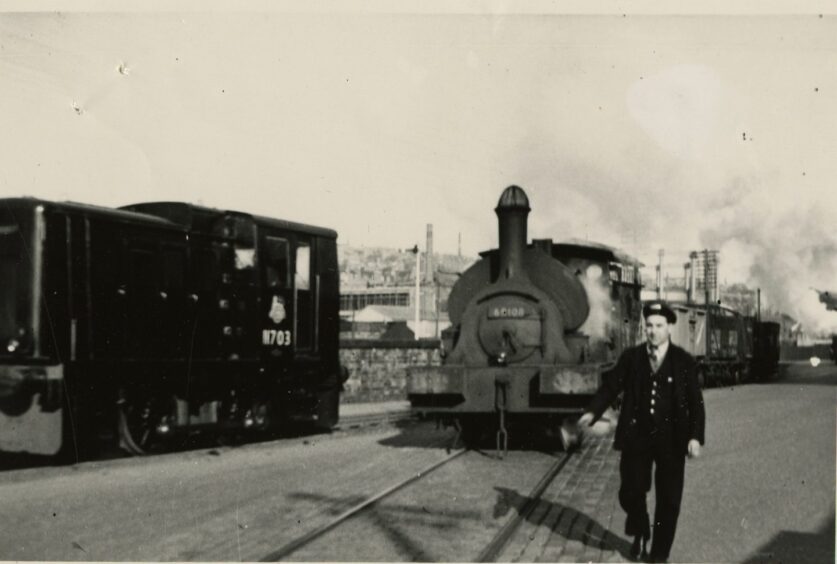
A crowded view at Dundee Docks in 1958.
Dr. Baxter stated that the photograph of No. 68108 and the diesel shunter that would replace it represents a sign of changing times.
“68108 was one of the shunters built by the North British Railway in 1895 and used to work the railways at Dundee Harbour for many years.
“These locomotives were affectionately known as pugs, and many had lengthy careers.
“11703, subsequently renumbered D2703, was one of eight D2/1 class shunters manufactured for British railways during the 1950s.
“It did not enjoy the longevity of its predecessor, being scrapped in 1968.”
Wormit Station
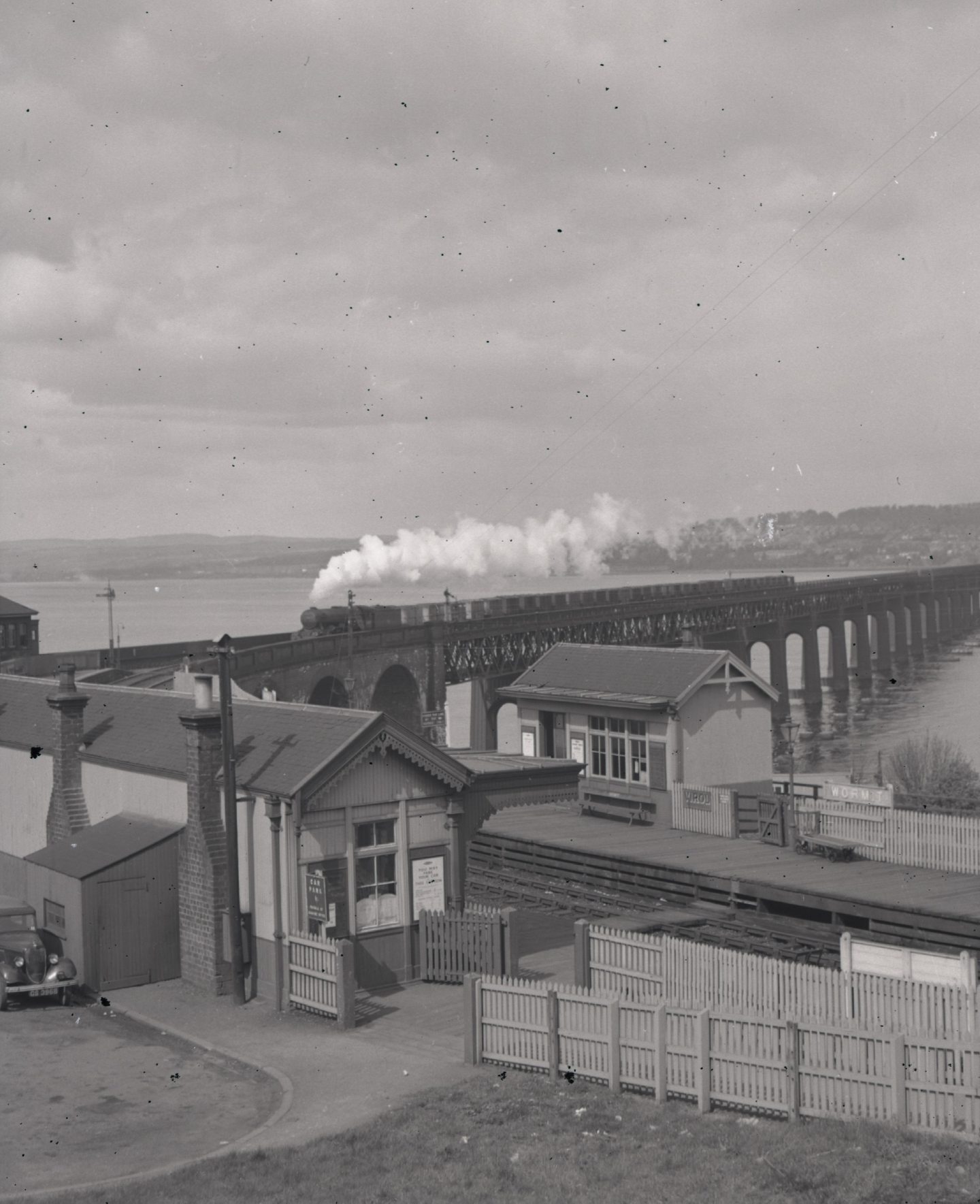
An evocative shot of Wormit Station, with an Edinburgh-bound freight train crossing the Tay Rail Bridge in the backdrop.
Wormit was a popular commuter stop on the line connecting Dundee and Tayport.
Read more on Straightwinfortoday.com

Comments are closed, but trackbacks and pingbacks are open.