

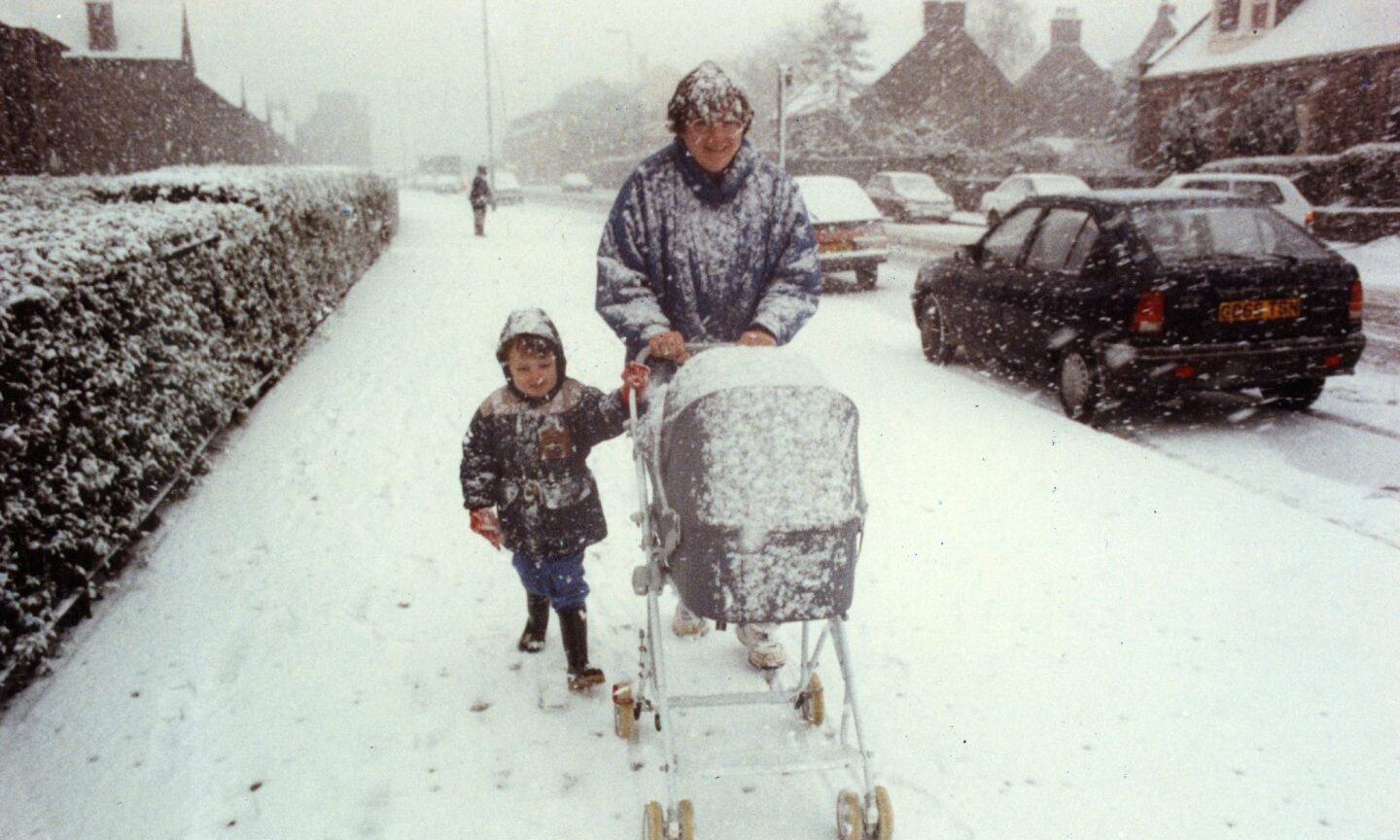
When heavy snow brought Dundee to a standstill in January 1991.
The snowstorm produced widespread disruption and catastrophic traffic congestion, but some people took advantage of it, including one family who built their own igloos.
Dundee was immobilised by massive snow drifts in January 1991, rendering many streets unusable and leaving the city gridlocked. The blinding snow overwhelmed the city’s gritters and snowploughs.
Some people enjoyed sledding and snowball battles, while others struggled to get to the shops or had to walk miles home.
The traffic congestion were characterised as “the worst in living memory”. Journeys that ordinarily take 20 minutes took about three hours.
White-out was deemed ‘absolutely chaotic’
Although Dundee had a history of heavy snowfall, it had been four years since the city had faced such harsh winter weather.
The new year began with persistent rain, and the Met Office issued warnings for the first weekend, expecting 100mph winds, storms, and snowfall.
The city thankfully avoided the worst of it over the weekend. On Monday, heavy snow fell in Dundee, and Tayside Police warned commuters “not to bother even attempting to travel” unless “exceptionally necessary”.
A spokesman said: “It’s just a white-out – absolutely chaotic.”
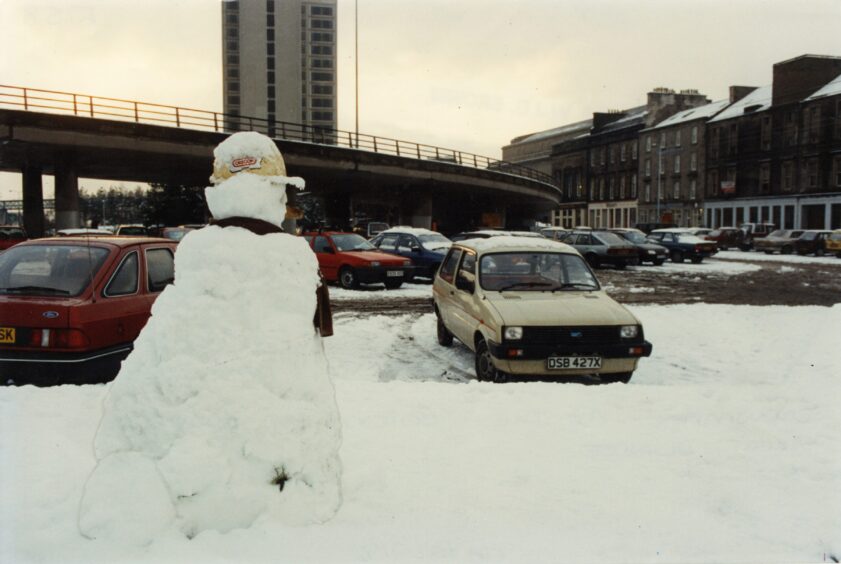
The roads department dispatched 24 tractors and 23 gritters, but road conditions caused tailbacks throughout morning rush hour.
The Evening Telegraph said that cars were stranded nose to tail on the A85 Dundee-Perth route as the blizzard began around 9 a.m.”Despite minor bumps, there were no reports of serious incidents.
“On the Dundee-Forfar Road, vehicles were similarly taken off guard as the route suffered white-out conditions.”The surface was clear and uncongested for commuters until just before 9 a.m., but it quickly became covered as the snow went north.
“Within less than half an hour both carriageways were white.”
The snow got worse at evening rush-hour
Dundonians walked through snow-covered pavements.
The snow continued to fall throughout the afternoon, blanketing the city.
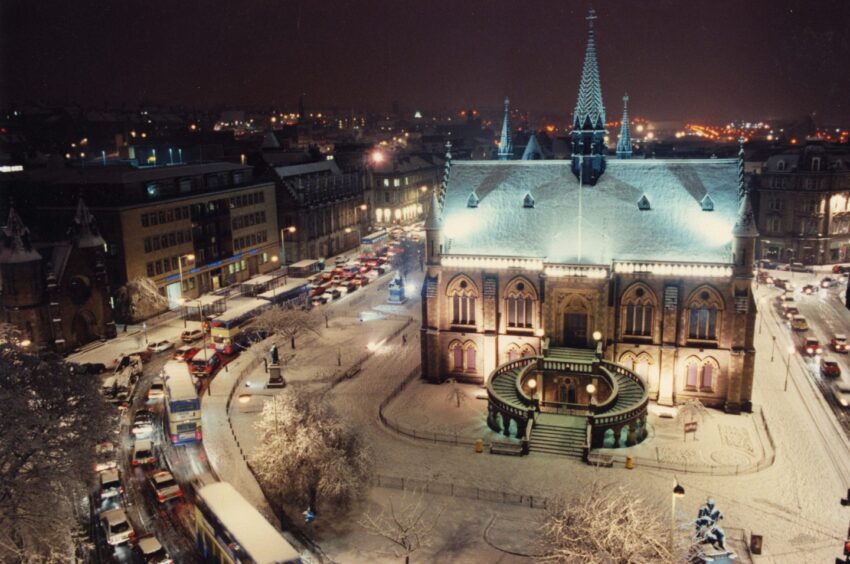
During the evening rush hour, the snowstorm caused a traffic nightmare.
Drivers returning from work in Dundee were detained in the city centre as the bus fleet came to a halt due to the severe weather conditions. One bus left Dundee High Street at 5.40 p.m., and 75 minutes later, it had barely reached the rear of the Wellgate Centre on Victoria Road.
Most bus services in the city were suspended or came to a standstill, forcing people to walk considerable distances home in snow.

One bus driver waited three hours in his broken-down vehicle on Arklay Street.
The community spirit showed through. While he waited for help, a merchant served him tea and chocolate biscuits.
In one small stretch of road, seventeen vehicles had been abandoned. Tayside Police described the scenario as “bedlam”.
Dundee became a ‘slow-motion city’ thanks to snow in 1991
All routes between the west end and Broughty Ferry were blocked.
A lot of hospital employees had to spend the night at their workplaces.
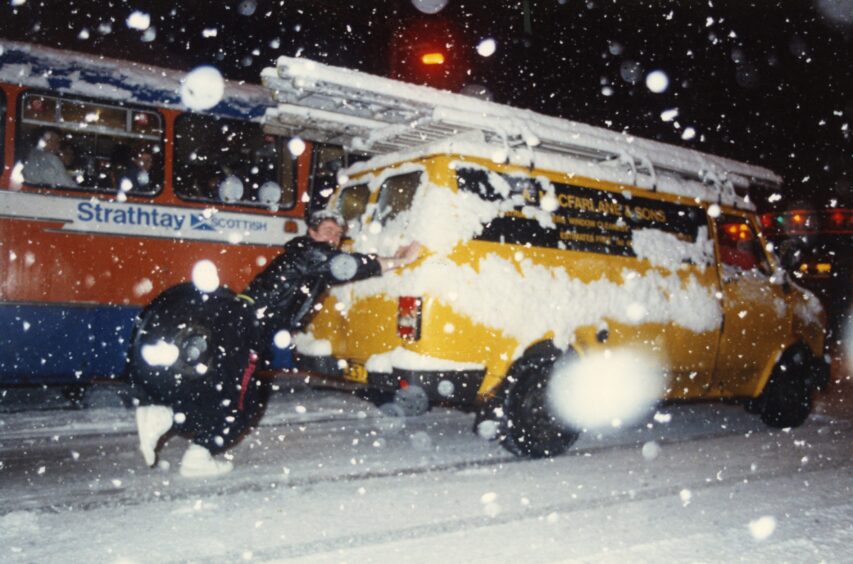
According to the Courier, there was an early warning in many places for the overnight and morning snowfalls. “Perhaps their arrival and absence created a false impression.
“The soft, gentle flakes that began to fall down so beautifully around teatime were initially noted simply for their size.
“They appeared to be more like white leaves than snowflakes, due to their size. “Then their persistent buildup imposed a sense of unease on viewers’ awareness.
“The combination of their tea-time scheduling and the evening rush hour turned a snow scene into a traffic jam, unprecedented in many drivers’ experiences.
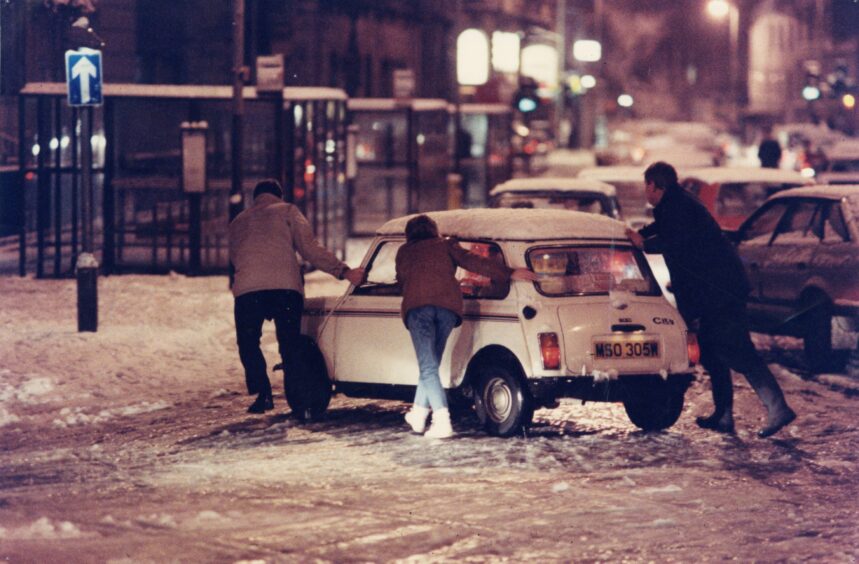
“Some two inches of snow, some buses sliding broadside to the roads, and a build-up of cars attempting to escape from parking lots all at the same time laid the groundwork for a monumental snarl-up in some places.”
“For hours, Dundee was a slow-motion metropolis.”Drivers proceeded at a snail’s pace, looking for main roads, side roads, or any road that provided an exit.
“Some drivers took it in stride, some stayed at work until the traffic cleared, and others got out of their vehicles and strolled.
“Police and road gritting vehicles, often miscalled by those they were trying to help, simply could not get through to where they were required.”
Snowball fights and sledging were popular
The conditions resulted in the cancellation of all non-emergency ambulance calls and major interruptions to train services.
Dundee Airport employees tried to keep the runway free. Only one flight had to be rerouted during the worst of the weather.
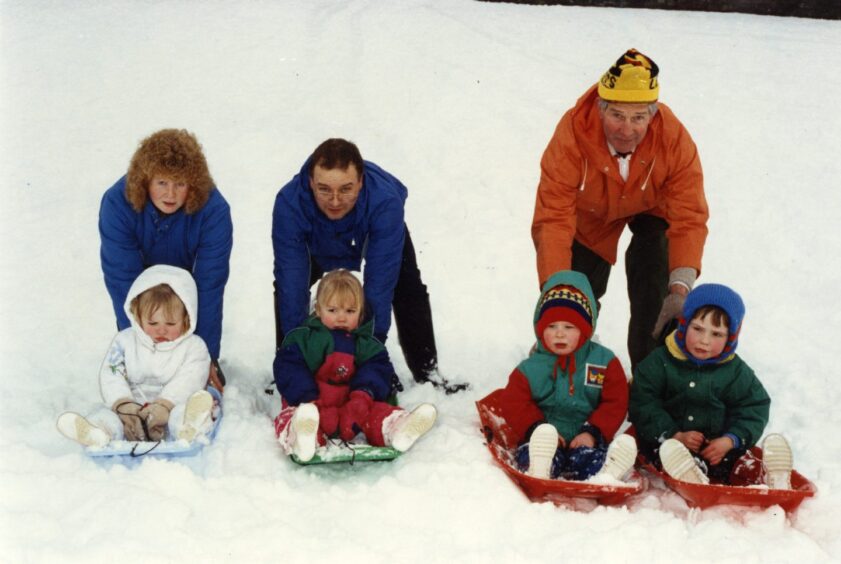
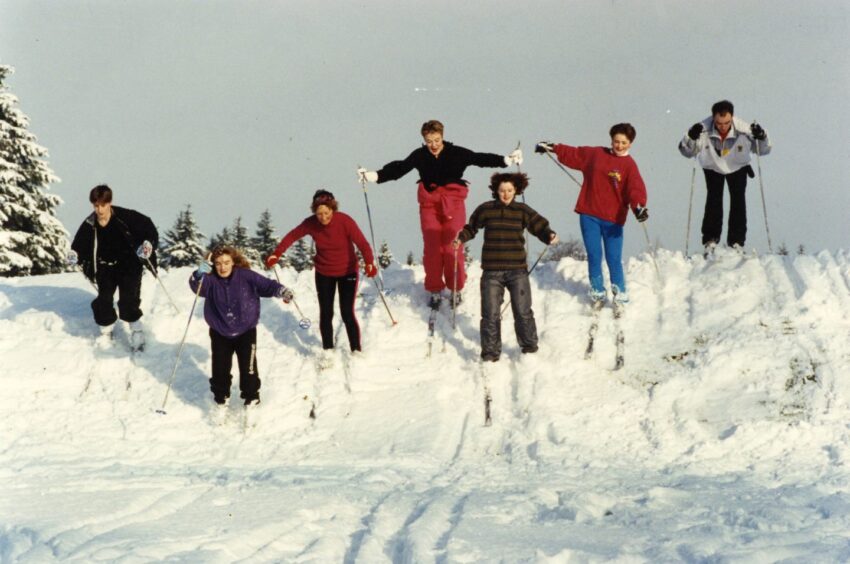
Schoolchildren enjoyed snowball battles, while families went sledding and skiing at Finlathen and Lochee Parks.
Dundonians awakened the next day to find the city streets still covered with snow.
Fortunately, the road department’s gritting crews worked diligently overnight to avoid a repetition of the previous day’s traffic congestion. “Herculean” was used to describe the snow removal effort.
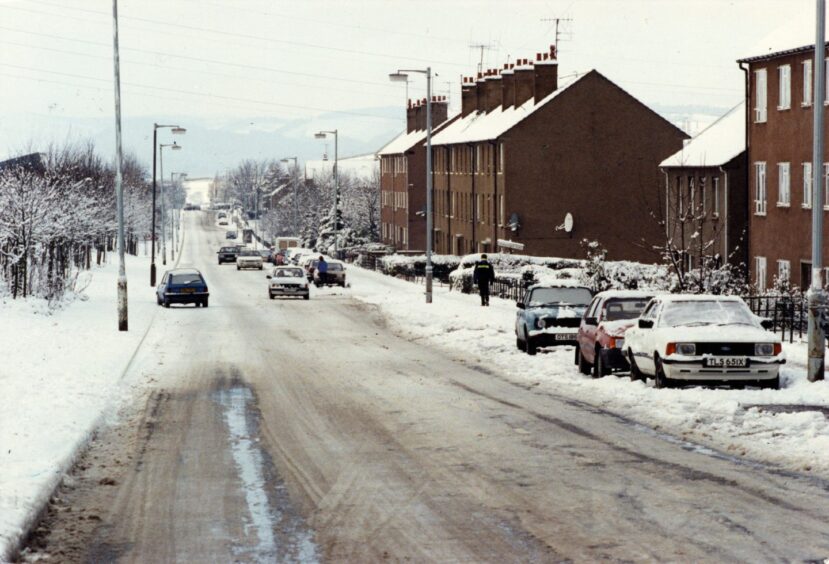
Most commuters anticipated the snowfall and left early for work. Major routes were prioritised for snow removal and gritting.
However, many small and back roads in the city remained blocked, and pavements were thick with ice, resulting in a few slips and falls.
The ongoing building of Dundee’s new inner city ring road was delayed owing to weather, although buses, trains, and airlines gradually resumed normal operations.
Conditions weren’t any better elsewhere.Perthshire was virtually cut off when the ferocious blizzard blew through, but Montrose and Brechin managed to evade the worst of it.
Arbroath received heavy snowfall, prompting the swans of Keptie Pond to leave the frozen water and parade up and down Keptie Road.
They were joined by a group of ducks. Drivers heeded warnings, preventing accidents.People hoped the chilly spell will end soon.
Douglas family made the most of cold snap
By Wednesday, fresh snow had blanketed Dundee, but meteorologists assured that it would not be as terrible as Monday’s storm.
A few more inches of snow fell. Some staff were sent home early after work.
Sledges were in considerable demand during the final flurry, which delighted children.
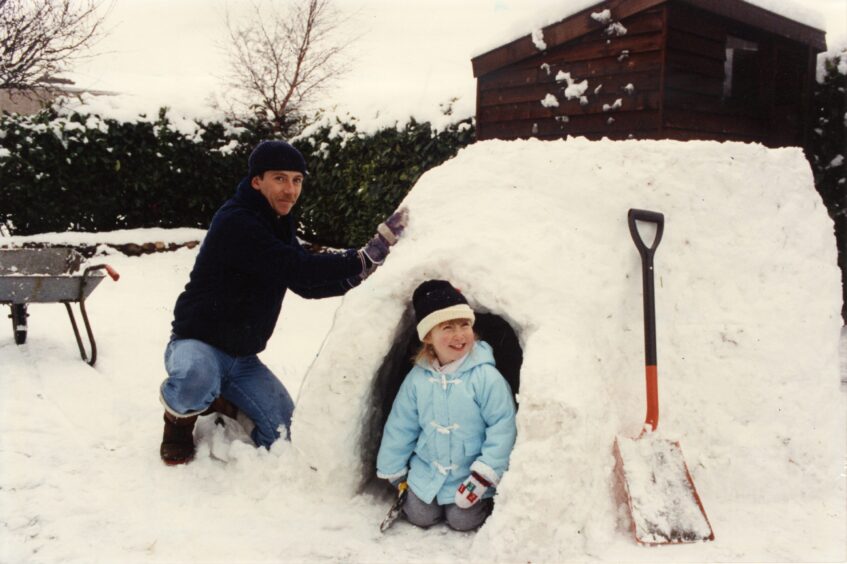
During the cold spell, a Douglas family erected an igloo in their backyard, which served as a “second home” for two-year-old Louise Aiton.
The cold temperatures lasted for a whole week. Dundonians skated and played ice hockey on the frozen Swannie Ponds.
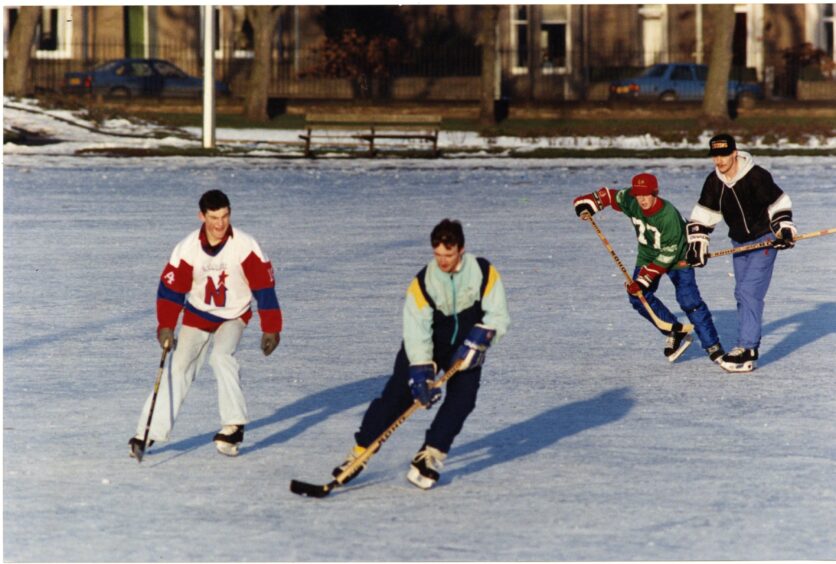
It was picture-postcard before winter finally loosened its grip.
Read more on Straightwinfortoday.com

Comments are closed, but trackbacks and pingbacks are open.