
Warning for Edinburgh nightclub Garibaldi’s after claims of over-capacity and under-age breaches

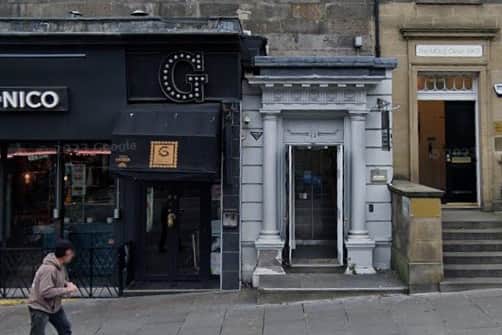
Warning for Edinburgh nightclub Garibaldi’s after claims of over-capacity and under-age breaches.
Police issued a warning to an Edinburgh nightclub after they expressed concerns that it was usually overcrowded and that younger people were entering.
Garibaldi’s on Hanover Street was forced to close for a month over a year ago due to similar concerns, and it spent four months with a terminal hour of 1am rather than 3am.
The nightclub changed hands in July 2025, shortly after the limitations on the nightclub’s closing time were lifted, but the difficulties appeared to return under its new manager, Adrian Cichy.
During Monday’s licensing board meeting, a representative from Police Scotland expressed worry about overcrowding and the possibility of young persons entering.
Police sergeant Grant Robertson said he was’reluctant‘ to put the nightclub back before the board, but believed it was necessary since the agency was ‘unable to make progress’.
He stated that overcrowding problems posed a ‘risk to public safety’ and that he was bringing the issues to the board’s notice in case they wanted to take action.
He told councillors about an incident early on November 22 in which a 16-year-old with a Gari’s admission stamp on his wrist and a phoney ID attempted to enter.
The kid told police that other members of his year group were inside the club, but Sgt Robertson said police could not determine whether under-18s were present based on CCTV footage.
However, they noticed that door workers were not performing challenge 25 checks and that there were numerous ‘younger appearing groups’ in the bar.
In another incident on December 13, a young woman grew suspicious that her drink had been poisoned and informed door staff.
Police said she claimed that the door personnel shouted at her and urged her to leave, while the glass in question was picked up, preventing further investigation.
Police reviewed CCTV footage and discovered that nothing was inserted in the glass. In another occasion, on November 16, Sgt Robertson reported a huddle of people outside the nightclub, posing an emergency egress risk.
Police urged door workers to remedy the issue, and they ‘originally had minimal control’ but ‘finally managed to construct anything like a queue’.
In two occurrences on December 3 and January 18, police were concerned about the number of individuals in the club, with the first involving staff who were unsure of the venue’s capacity.
During the second incident, door staff told police that the bar supervisor had ‘pressurised’ them to allow more people inside the event than was permitted.
Garibaldi’s has a capacity of 135, down from 180 in March 2025, but during the January event, door personnel believed that up to 300 individuals were inside.
Prior to the cops raising issues with the staff inside, the bar supervisor was spotted ushering approximately 20 people off the premises.
Once inside, Sgt Robertson stated that cops discovered the club to be ‘overcrowded’ and ‘totally impassable’. Police reported crowding concerns on January 24. Mr Cichy sat in the gallery before the hearing, clothed in a suit and a purple tie.
After Sgt Robertson addressed councillors, Mr Cichy and his licensing counsel, Alastair Macdonald, took to the deputation stand to explain the club’s side of the story.
Mr Macdonald blamed many of the capacity-related incidents on the door staff, but said that a new door staffing business had been introduced a few weeks ago, and incidents have since decreased.
Mr Macdonald noted that the company has been quick to respond when concerns were expressed.
Regarding the 16-year-old with the Garibaldi stamp found outside the venue, he stated that the minor had never entered the nightclub and had reproduced the stamp on his own.
Furthermore, he stated that Garibaldi’s had subsequently converted to a system of date-stamped wristbands, which would be more difficult to counterfeit.
Regarding the young woman’s worry that her drink had been spiked, Mr Macdonald stated that door staff were in the process of removing someone from the club, and their ranting was not directed at her.
Mr Macdonald stated that converting to a student-focused audience had resulted in certain changes; before to the purchase, there was an equitable split between students and non-students, but the club was now attempting to cater primarily to students.
SNP councillor David Key enquired about the venue’s efforts to guarantee that visitors were students. Mr Cichy said that matriculation cards would be verified upon access, but that some non-students were occasionally allowed in.
Labour councillor Cammy Day questioned Mr Macdonald on who was responsible for dealing with the premises’ door: the door firm or the club.
He enquired about the attorney: “I get your point there that door staff should monitor queues, but ultimately they are employed by the company.” Mr Macdonald responded, “Places hire door businesses, which then hire door workers.
So the door workers are not [club] employees, but rather door company employees.” Cllr. Day responded, “So your client has no responsibility at all?”Mr. Macdonald responded:
“I say that ultimately it’s the responsibility of the premises operator, but these are not their own staff.” Councillors agreed to issue a written warning to the venue and approved Mr Macdonald’s idea that a personal licence holder be present for a portion of each night.
Read more on Straightwinfortoday.com

Comments are closed, but trackbacks and pingbacks are open.