

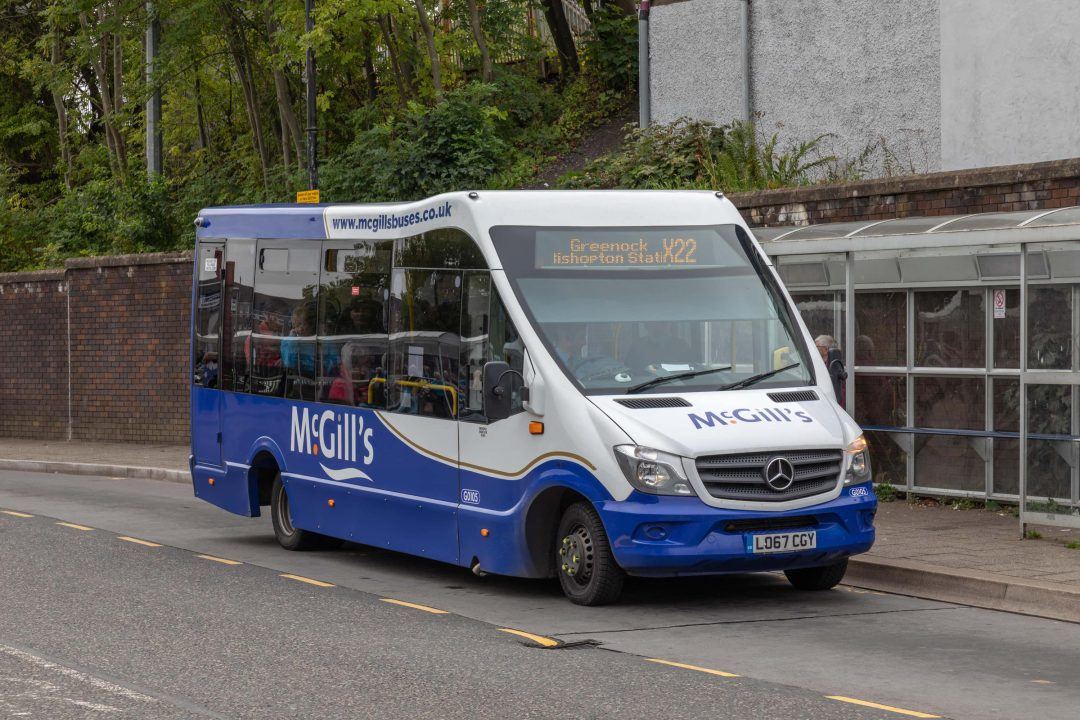
McGills Group taking legal advice after zero emission bus scheme snub.
According to company chair Ralph Roberts, there is a “question about fairness and transparency” in the allocation of the Zero Emission Bus Challenge Fund.
After Transport Scotland rejected its bid to extend its electric bus fleet, a Scottish bus business has stated that it is seeking legal counsel.
McGills Group, the UK’s largest independent bus operator, said it sought £4.3 million from a government plan to purchase 33 zero-emission vehicles from Falkirk-based bus maker Alexander Dennis Limited (ADL).
The company stated that the move would have increased Scottish jobs and allowed it to remove more diesel vehicles from its fleet across Scotland.
However, when the results of the third phase of the Scottish Zero Emission Bus Challenge Fund (ScotZEB3) were published on Wednesday, five additional bus companies received £45 million in government funding.
McGills said the largest portion – £13 million – had been awarded to coach manufacturer Ember to buy 100 Chinese electric coaches to expand its existing network, with no diesel vehicles being replaced.
Chairman Ralph Roberts stated that the corporation is “disappointed” with the outcome and will “review how the bid was scored.”
“The original purpose of these rounds of funding was to convert diesel buses to zero emission – improving air quality in local communities and accelerating the sector’s journey to net zero,” added the politician.
“It now appears the fund is being used to support new competing services rather than replace existing diesel fleets, which raises serious questions about whether it is delivering on its stated aims.”
Mr Roberts went on to say, “There is also a fundamental concern regarding the fairness and transparency with which this funds was given.
“We will extensively examine the scoring procedure and will consider legal options to appeal this judgement and ensure that the process was carried out appropriately.
“Ultimately, if public funding is not being directed towards removing diesel buses from our roads, then the Scottish Government needs to explain how this approach helps deliver cleaner air and a faster transition to net zero.”
In a statement, Ember stated that the investment will allow it to manage Scotland’s largest intercity and regional coach network, making Scotland “the only country in the world with a fully electric national coach network”.
The business stated that it has “tried hard” to purchase electric coaches from Scotland, but that ADL, the country’s sole bus manufacturer, does not produce them and has no intentions to do so.
Rock Road and Lothian Buses have both placed orders for over 100 zero-emission cars with ADL.
Last year, the Scottish Government was obliged to step in to fund a furlough scheme for ADL employees after the company announced plans to consolidate its operations at a single facility in Yorkshire, putting approximately 400 jobs at danger.
At the time, executives stated that the company would require an increase in orders to become financially viable in the central belt.
Transport Secretary Fiona Hyslop said: “The Scottish Government’s final investment of £45 million through ScotZEB3 demonstrates our commitment to a zero-emission future for Scotland’s bus sector.
“Since 2020, we have invested more than £154 million in zero-emission buses and infrastructure.” This additional £45 million will support the ambition and leadership of operators looking to decarbonise their operations as soon as possible.
“It also ensures that the bus sector benefits from Scotland’s investment in reliable, renewable electricity supplies.
“With every £1 of public funding leveraging over £2.50 of private investment, ScotZEB3 has demonstrated that Government and industry can work together to deliver transformative climate action.
“The programme is not only reducing emissions – it’s supporting jobs and our economy, connecting communities across Scotland and improving the experience for passengers across the country.”
In total, over 300 zero-emission buses and 295 charging stations have been funded.
Ember will be the largest recipient, receiving over £13 million for 100 buses and 43 charge spots.
Rock Road has received £11.5 million for 93 buses and 101 chargers.
Lothian Buses, which runs in Edinburgh, received £9.6 million for 60 vehicles and 88 chargers, while First received nearly £6 million and Stagecoach received approximately £4.5 million for 44 buses and 25 chargers.
Read more on Straightwinfortoday.com

Comments are closed, but trackbacks and pingbacks are open.