
Walk inside the doors of the new Lawside Academy in 1966, thanks to archive images of the previous Dundee school.

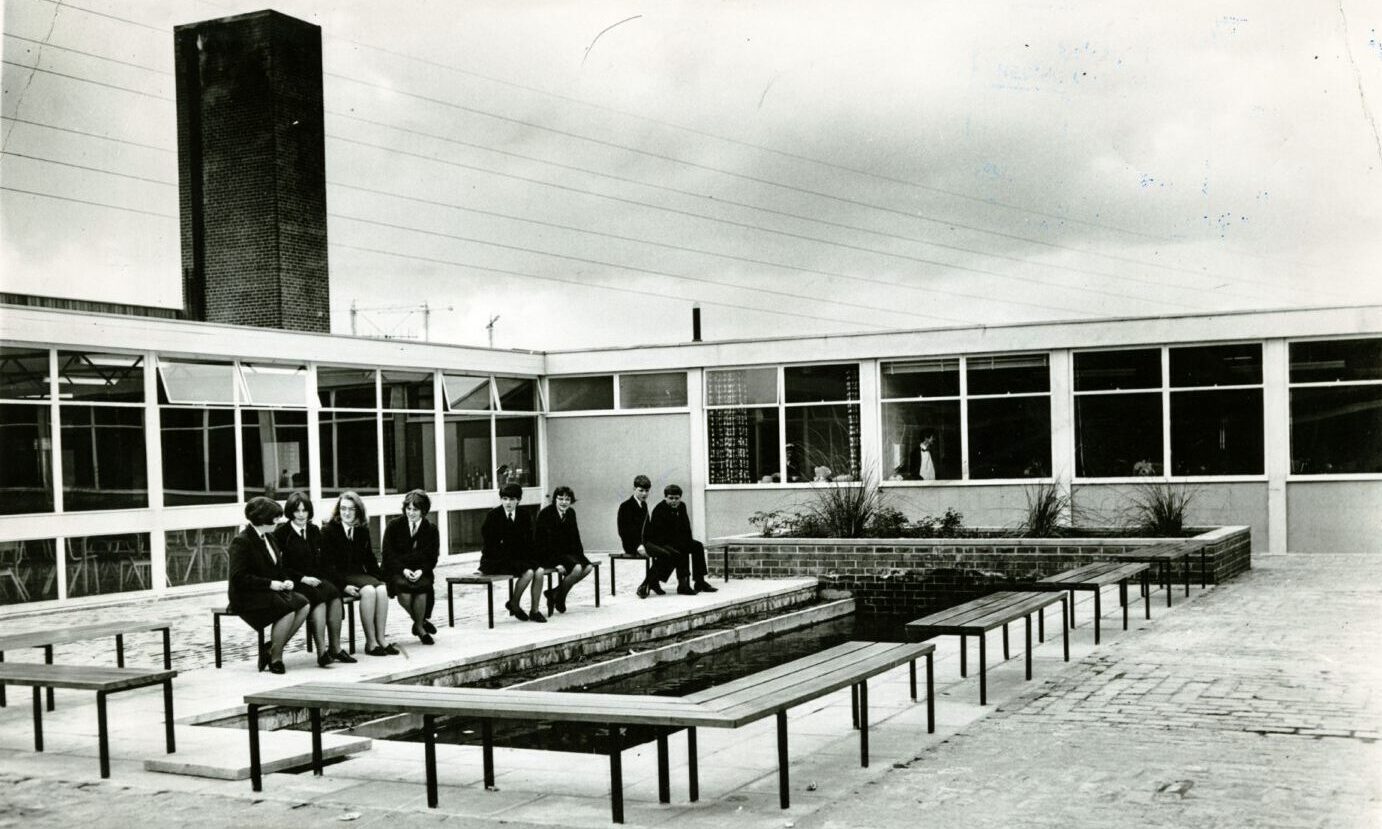
Walk inside the doors of the new Lawside Academy in 1966, thanks to archive images of the previous Dundee school.
The city’s population was growing in the 1960s, and the new building represented a new beginning for students at what was once Europe’s most northerly state Catholic school.
In May 1966, Lawside Academy celebrated a “red-letter day” by moving into a new structure. This is how the Dundee school appeared.
These black-and-white images from the DC Thomson archives transport us back through the doors as the students adjusted into their new surroundings.
It represented a new beginning for a school that had previously held the distinction of being the most northerly state Catholic school in Europe.
It was one of numerous new schools constructed during the city’s population boom in the 1960s.
From convent school to modern academy
Long before Lawside Academy opened its doors, the Sisters of Mercy arrived in the city in 1859 to educate girls and women who had worked long hours in jute mills.
Their objective led to the establishment of a private girls’ secondary school on Lawside Road, which opened in August 1907 with 63 students enrolled.
The school became co-educational and was passed to local council management by the 1918 Education (Scotland) Act.
Lawside survived two World Wars and has served generations of local youngsters.
By the postwar years, the Lawside Road premises were no longer adequate.
Pupil numbers had increased from less than 300 to over 900.
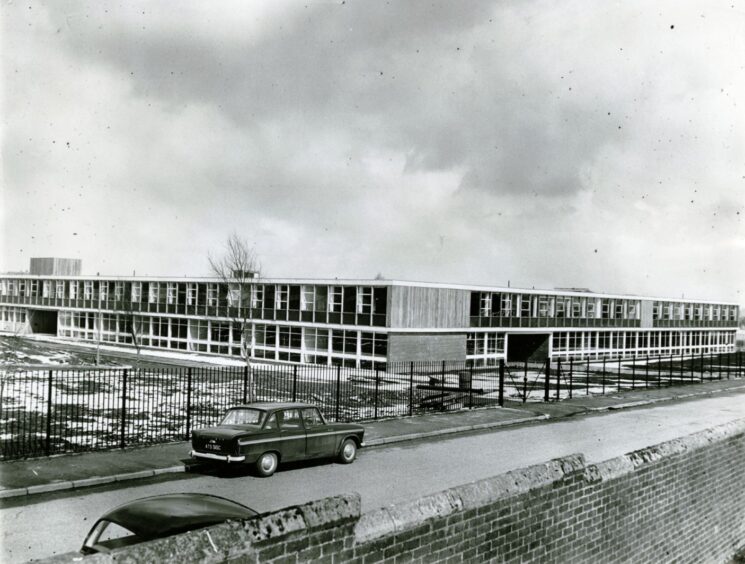
After multiple delays, a seven-acre site was discovered on Macalpine Road.
Bett Brothers of Dundee won the tender in February 1964, bidding £376,847.
Work began in May after the existing homes on the site were cleared.
The new building was completed fast and made an immediate impression.
It was a relatively local job.
Many Dundee enterprises supplied and fitted materials.
Inside Lawside ahead of opening day
The new school was outfitted with modern classrooms, specialised rooms, a library, assembly and dining halls, kitchens, a swimming pool, and medical facilities.
Extra amenities, such as a language lab, scientific rooms, a dark room, a chaplain’s room, and a biology greenhouse, could be accommodated thanks to careful planning.
The new building unified everyone under one roof.
Until then, students were divided between the old academy on Lawside Road, the Lawside Annexe, and St Joseph’s Primary.
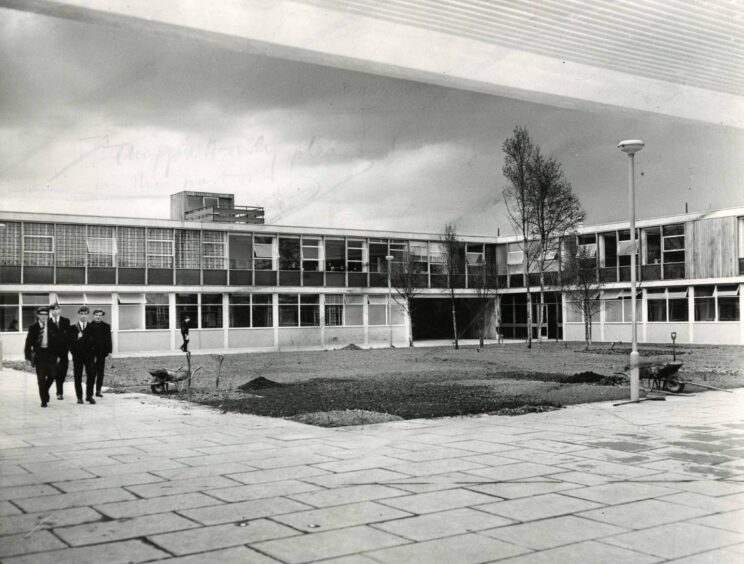
The inner court of Lawside Academy, with four students strolling across. The Courier was shown around before its official opening.
It says the institution was designed around a “quadrangle design” with the buildings clustered to shelter the play spaces from the “prevailing west and north winds”
Internal courtyards formed what was characterised as
The “cloistered effect” provided direct links between different departments.
It stated that the institution was built in a “quadrangle design,” with buildings grouped to shelter the play grounds from “prevailing west and north winds.”
Internal courtyards generated a “cloistered effect” that provided direct links between departments.
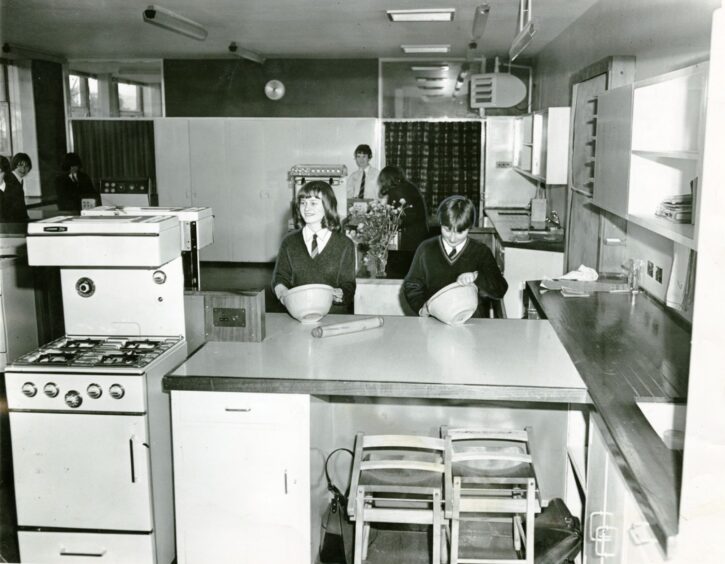
The primary classroom block was a two-story square building with a landscaped and paved courtyard, covered entrance from the playgrounds.
The layout was intended to maximise “daylight in classrooms”.
Rooms in regular use were located on the bottom floor, with less-used rooms above.
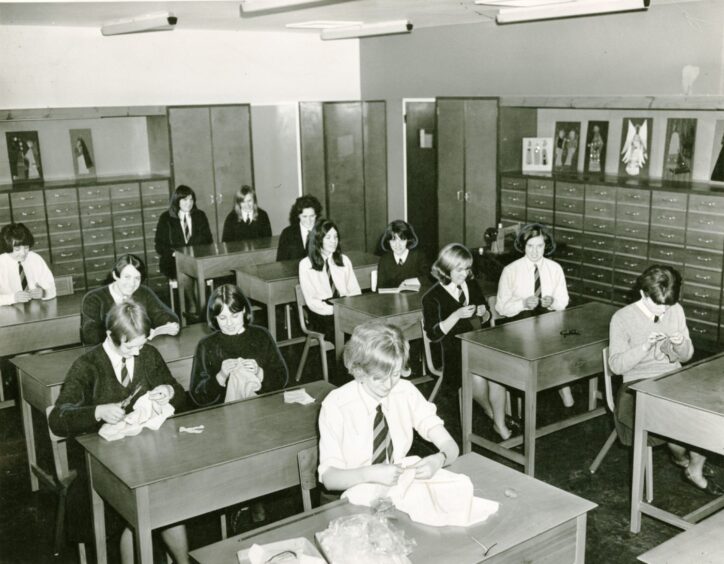
Science, homecraft, needlework, commercial studies, and typewriting were located in the east, south, and west wings.
The quieter north wing housed administration and staff offices, as well as the library, chapel, art and geography departments.
The lily pond was a popular attraction.
A janitor’s residence was positioned to monitor the main and kitchen entrances.
There were three tennis courts and a practice area outside.
Friday the 13th delivers a final twist
The Courier said that the building was mostly made of pre-cast concrete.
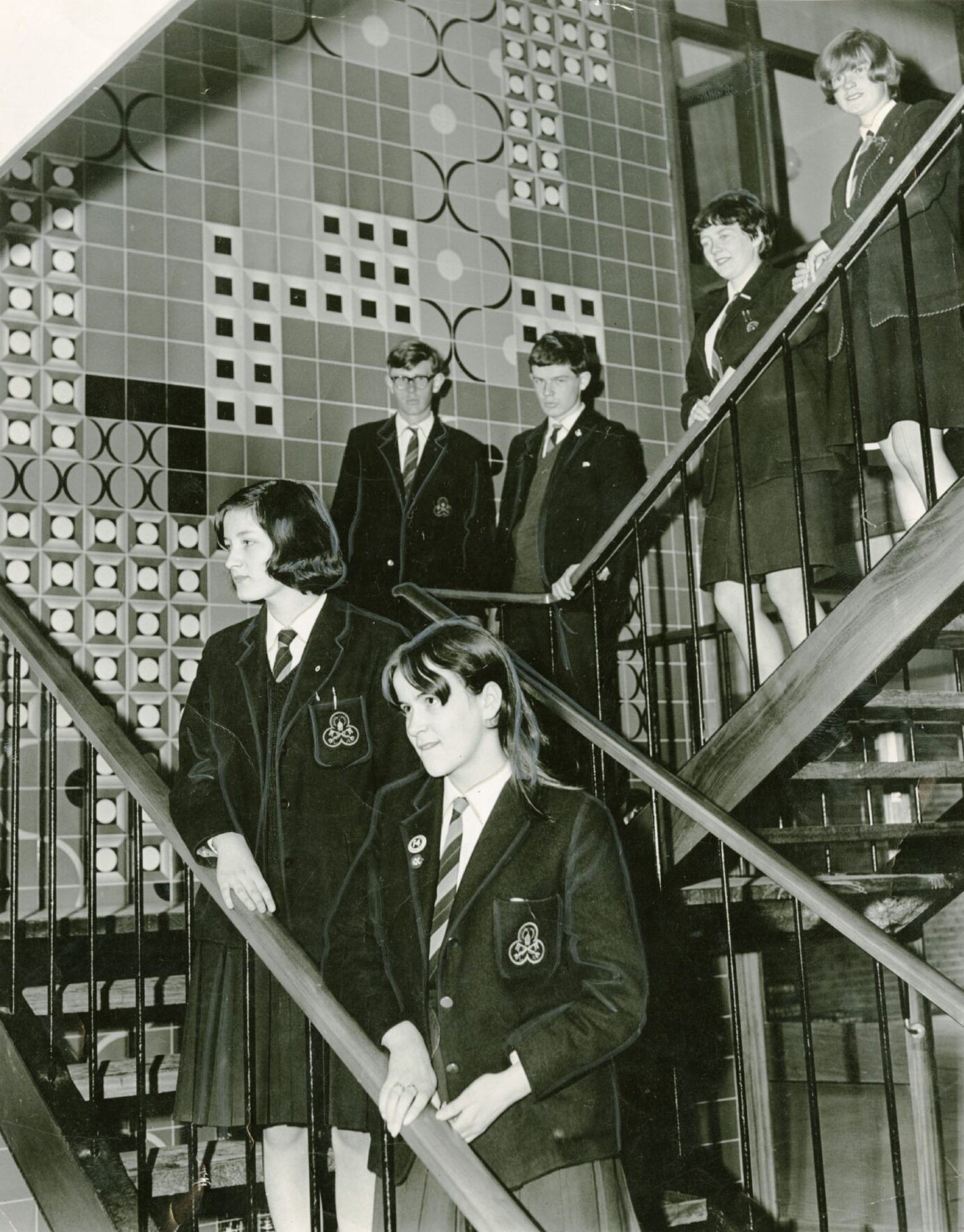
Inside, there were four identical staircases with exposed plank treads, each backed by two-storey ornamental panels in coloured tiles with abstract motifs.
The scientific labs were set up with stepped lecture rooms and fixed seating.
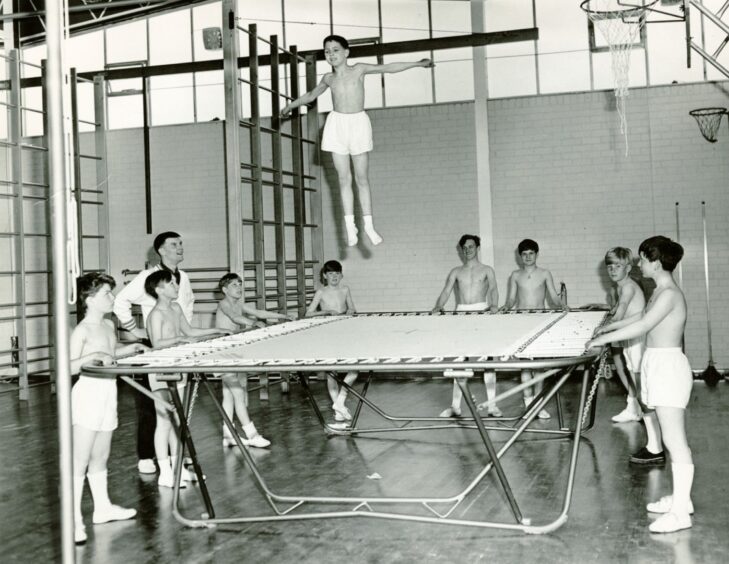
The gym, measuring around 66ft by 40ft, utilises high-level lighting to reduce shadows.
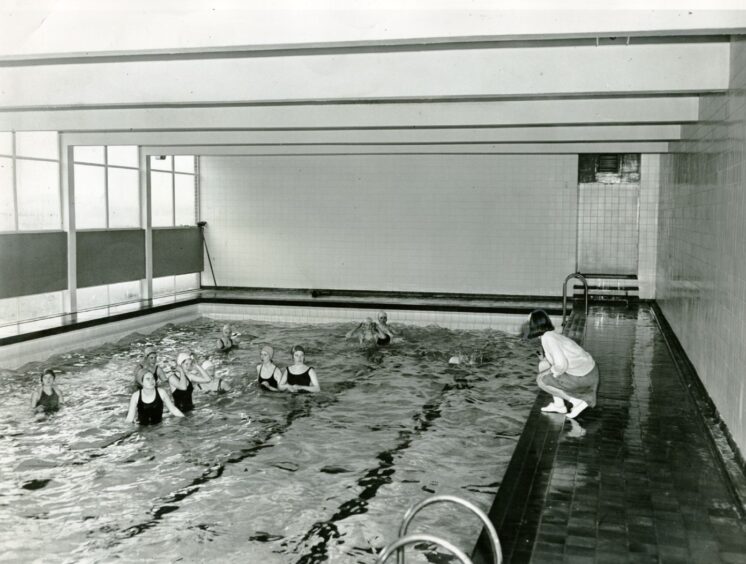
The swimming pool measured 50 feet by 25 feet and included “modern changing facilities”.
There were approximately 50 classrooms in total, as well as a fully equipped language laboratory complete with recording and instrument rooms.
The Courier said that heating was provided by oil-fired boilers and hot water circulation, with fan-assisted convector-type heaters and radiators.
Life at the old Lawside Road facility came to an abrupt end in May 1966, when an attic tap left on overnight caused significant flooding on the Friday before the move.
Senior students were sent to the playing fields, while first, second and third years were sent to different areas of the building while personnel dealt with the mess.
New academy hailed as milestone for city
The former Lawside Academy did not go out of use immediately.
A tiny area remained in use as a nursery school, while another operated as an auxiliary annexe to the Commercial College.
Bishop William Hart of Dunkeld opened the new school, describing it as a “red-letter day in the history of the Catholic Church in Dundee.”
The ceremony followed his earlier engagement that day at St Ninian’s Primary in Menzieshill, since both Catholic schools opened on the same day.
He stated, “The Sisters of Mercy, who created the humble roots of the academy 60 years ago, could never have imagined such a magnificent development.
“The new academy was not only a boon to the children of the Catholic community, but a tribute to the forward-looking policy of the education authority.”
Dr. T.E. Faulkner, education convener, presided and noted that the new Lawside had been under construction for nearly six years.
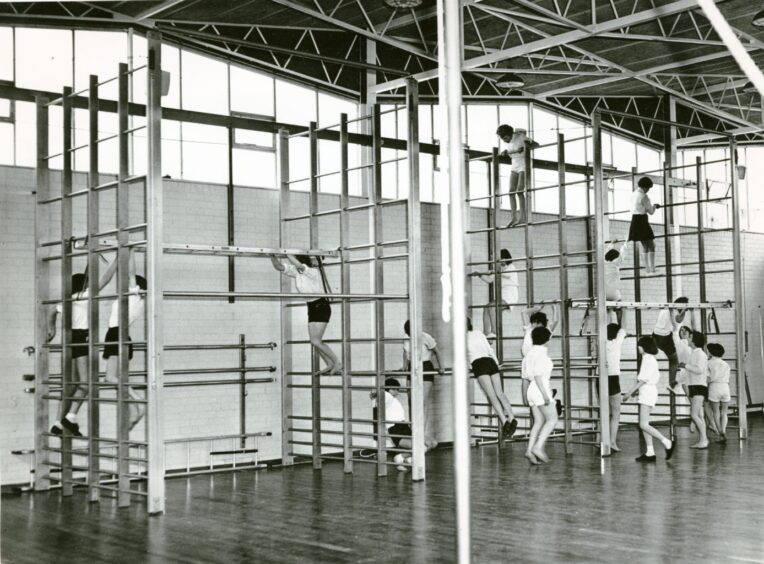
Lawside was the third secondary school completed in five years.
Dr. Faulkner emphasised the need for additional expansion to address the “rising birth rate and increase in the school-leaving age.”
Four more secondary schools were proposed, one in Craigie and Menzieshill, and two in Whitfield, including one for Catholic students.
Final chapter before a new beginning.
It was a thriving and popular school for decades.
Former students went on to have distinguished careers in a variety of professions.
Many of them chose the priesthood or religious life.
Many later returned as teachers, and by the centenary, nearly one-third of the staff had received their education at Lawside.
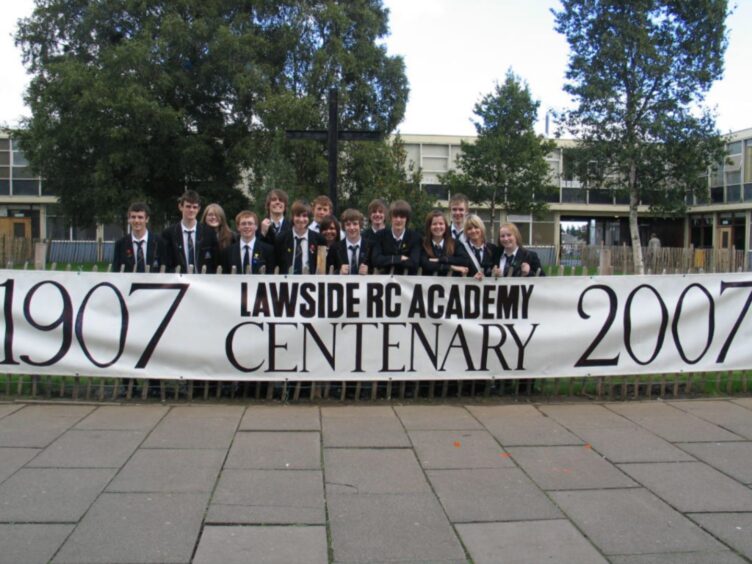
In 2007, several events commemorated the 100-year anniversary.
By then, however, the institution was on borrowed time.
With declining population numbers, the municipality could no longer justify sustaining three Catholic secondary schools in Dundee.
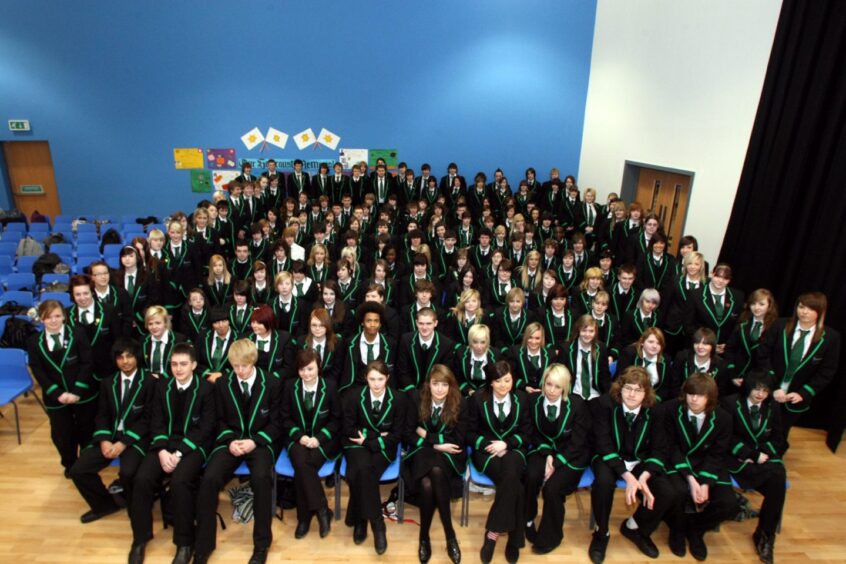
Lawside ceased operations in 2008 after 101 years and amalgamated with St Saviour’s High School as part of the council’s £90 million Public Private Partnership educational initiative.
Read more on Straightwinfortoday.com

Comments are closed, but trackbacks and pingbacks are open.